Einstein Telescope report compares a 10 km triangle with two 15 km L-shaped detectors
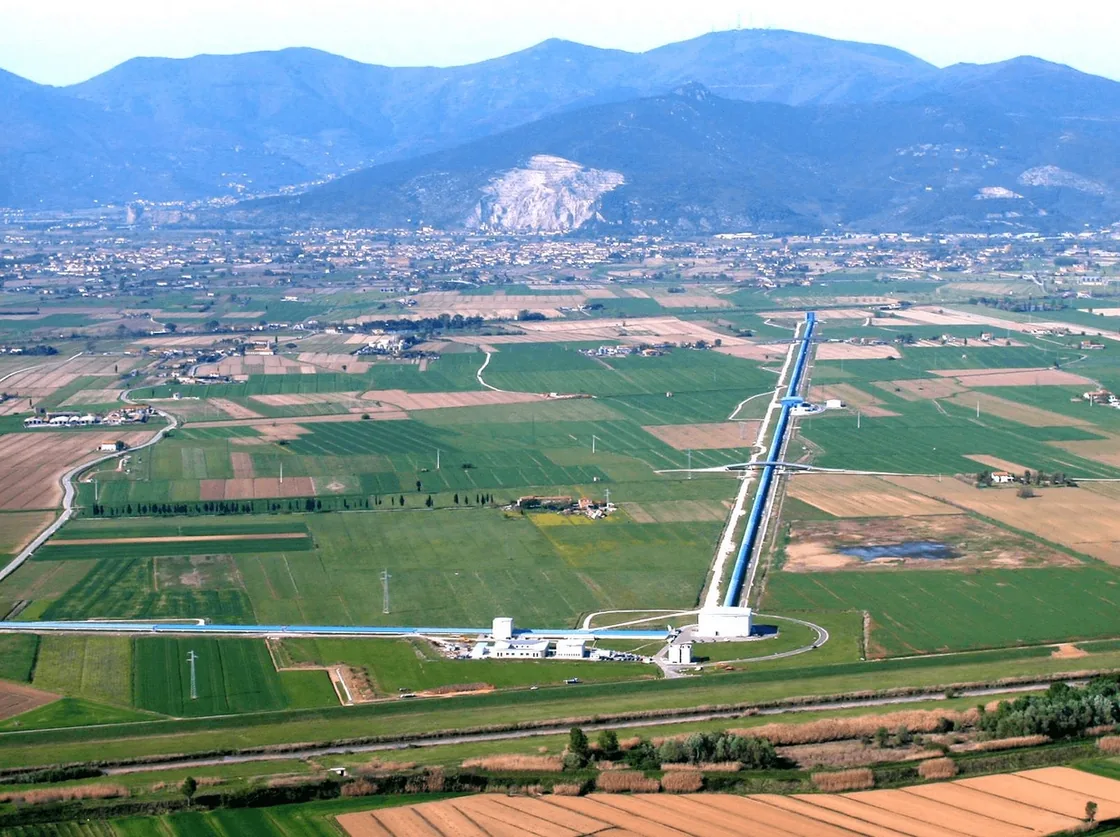
A report submitted on 7 October 2026 weighs a single underground triangle with 10 km sides against two L-shaped detectors with 15 km arms, about 1,200 km apart. Both meet the scientific goals, while arm length and orientation favor different measurements.

Two layouts for a future gravitational-wave observatory
The Einstein Telescope is a proposed European underground observatory for gravitational waves, tiny distortions of spacetime produced by events such as mergers of compact objects. Its Geometry Comparison Report was submitted to the Board of Governmental Representatives on 7 October 2026. It examines a single triangular site with 10 km sides and two L-shaped detectors with 15 km arms at sites about 1,200 km apart. The site-independent comparison covers scientific value, lifetime costs, risks, governance, and socioeconomic and environmental effects.
Arm length and orientation affect what can be measured
The report’s executive summary finds that both layouts can deliver the broad science program. The 15 km arms generally improve signal-to-noise ratio and the precision of many measurements compared with the 10 km triangle, although that advantage diminishes at the highest frequencies. Two substantially misaligned L-shaped detectors favor the localization and characterization of individual events. Nearly aligned L-shaped detectors favor searches for a stochastic gravitational-wave background, a faint persistent signal that could contain contributions from many unresolved sources, while giving up some localization accuracy. The triangle remains scientifically capable across the program and can combine signals from its interferometers to diagnose some instrumental disturbances.
The report informs a later decision
The report does not select a winning layout. Its comparisons have limits, including assumptions about environmental noise and conditions that depend on the eventual sites. The scientific instrumentation cost estimate does not establish the project’s total cost, which also involves civil and technical infrastructure. In its announcement dated 12 October 2026, France’s CNRS described 2027 as the expected time for a geometry and site decision. That is a stated timetable rather than a completed selection.
