Cell arrangement shapes how ferroptosis spreads
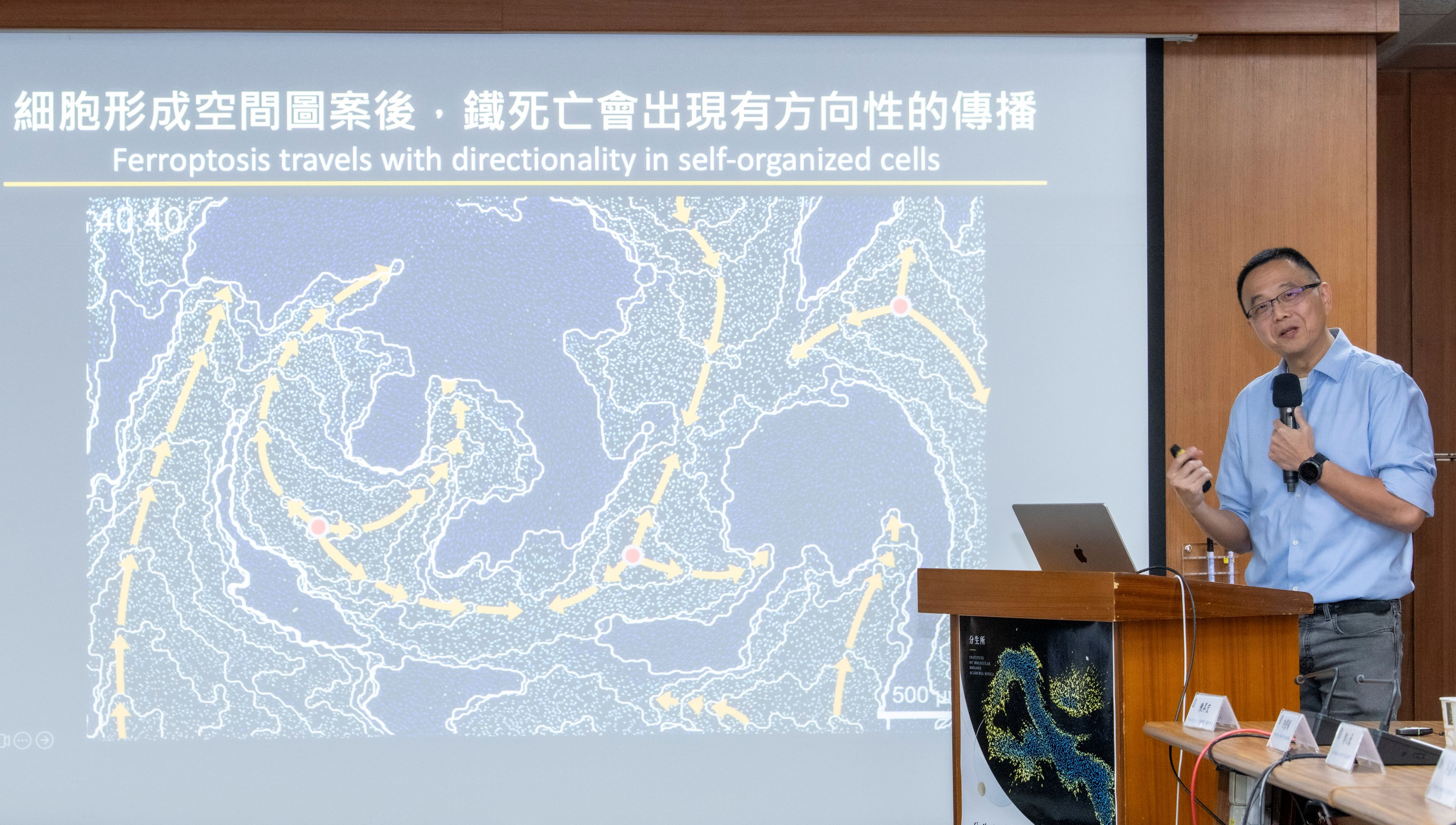
An Academia Sinica team found in cultured human epithelial cells that cell density and alignment influence the spread of ferroptosis. Dense, orderly regions can halt an advancing wave, while elongated cells make propagation more likely along their alignment.

Cell density changes how far a wave travels
Ferroptosis is iron-dependent cell death driven by lipid oxidation. It can spread from a few cells to their neighbors. Sheng-Hong Chen's team at Academia Sinica's Institute of Molecular Biology studied patterns that human epithelial cells form in culture, using live-cell imaging, single-cell RNA sequencing, pharmacological and genetic interventions, and mathematical simulations. Sparse, irregularly aligned regions were more susceptible to ferroptosis. Dense, orderly regions were more resistant and could form boundaries that stopped an advancing wave.
Oxidizable lipids gather at cell poles
When elongated cells aligned in the same direction, readily oxidized lipids accumulated at their poles. Waves then spread more readily along the cells' alignment than equally in every direction. Drug interventions and simulations indicated that differences in susceptibility across the pattern and the distribution of lipids work together to limit a wave's extent and direction. The paper appeared in Cell on October 15, 2026, and Academia Sinica announced the findings on October 16. The experiments mainly used cultured human epithelial cells. Whether the same mechanism operates in animal tissues or in people remains to be tested.