Hopcopter tests a tilting foot on sand and frozen ground
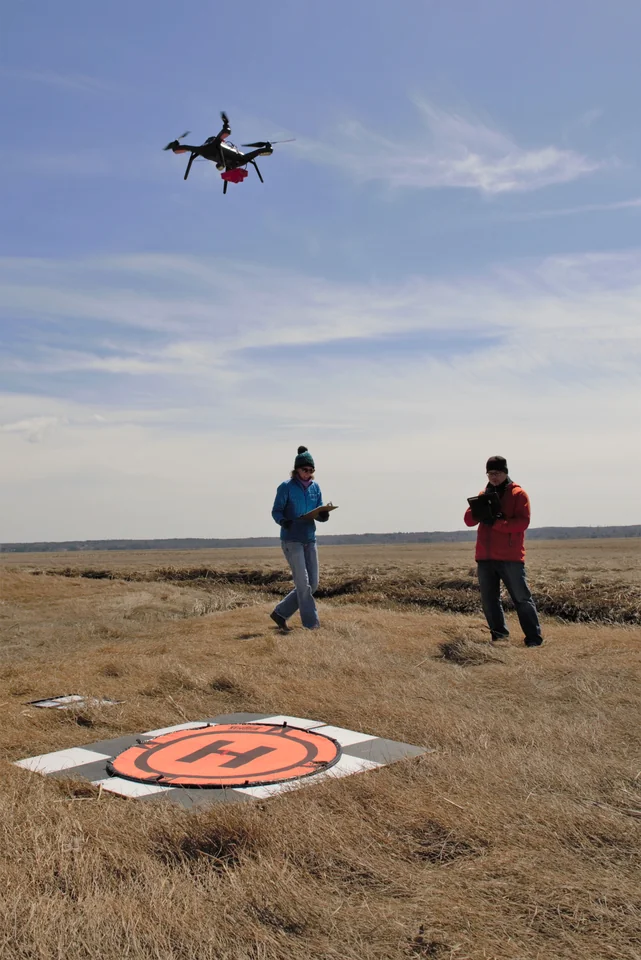
A one-legged quadcopter fitted with a wide, spiked foot covered a combined 34.3 m on sand and 22.9 m on frozen ground in pilot-directed hopping tests.
Original study by Kledkruemas and colleagues in Advanced Intelligent Systems
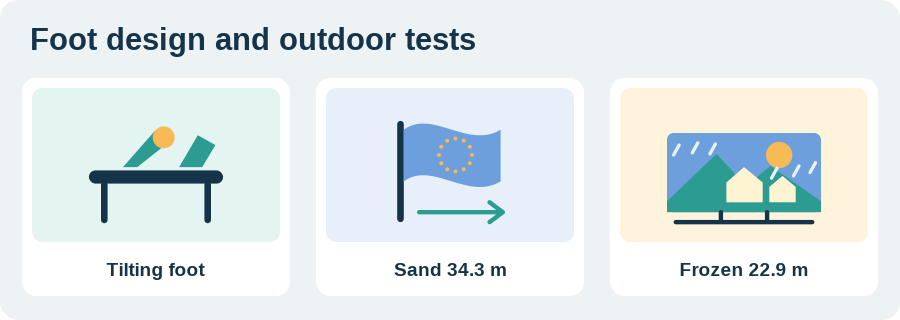
How the foot adapts
In a study published October 22, 2026, in Advanced Intelligent Systems, a team involving the University of Toronto and researchers in Hong Kong tested a new foot for Hopcopter, a quadcopter with a spring-loaded leg. A wider sole spreads the load on soft ground. A spherical joint lets the sole tilt on contact, elastic bands pull it back to centre in the air, and steel spikes help it grip.
What the outdoor trials showed
On loose sand the researchers logged 180 successful hops over a combined 34.3 m in 164 seconds, with noticeable slipping and drift. On uneven frozen ground the robot covered 22.9 m in 99 hops and 83 seconds, with no visible slipping. A pilot commanded the hopping while onboard controls stabilised the robot. The trials establish how the prototype moved on those surfaces under test conditions. Autonomous navigation for inspection or rescue remains to be demonstrated.
