Comet impacts rarely delivered concentrated hydrogen cyanide to early Earth in simulations
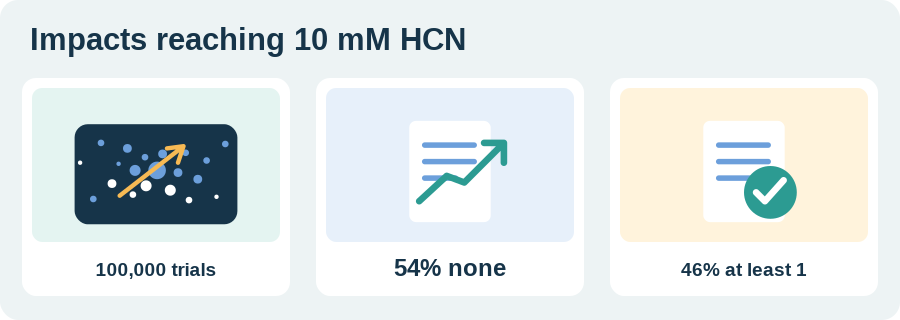
A study published on October 28, 2026, simulated 100,000 histories of early Earth’s bombardment by short-period comets. In 54% of the simulated histories, no impact on exposed land delivered enough hydrogen cyanide to reach the concentration used as the study’s benchmark.
Scientific Reports paper, results and Figure 3
What counted as a successful delivery?
Richard J. Anslow and colleagues set the benchmark at 10 millimoles per litre (10 mM) of hydrogen cyanide (HCN), a starting material in some laboratory experiments on chemical reactions that could have preceded life. The team modelled how comets broke up during atmospheric entry and how much HCN survived the heat of impact. It counted impacts on exposed land and assumed, favourably for delivery, that the surviving HCN was diluted only in water from the comet’s own ice.
What the simulations found
The median number of qualifying impacts was zero. The other 46% of simulated histories included at least one. Small comets tended to break up in the atmosphere, while impact heat could destroy HCN in those that reached the ground. The percentages describe outcomes under the model’s assumptions about the atmosphere, exposed land and dilution. How life began on Earth remains unresolved.
