Hiroshima firestorm plume rose above 11.3 km, study estimates
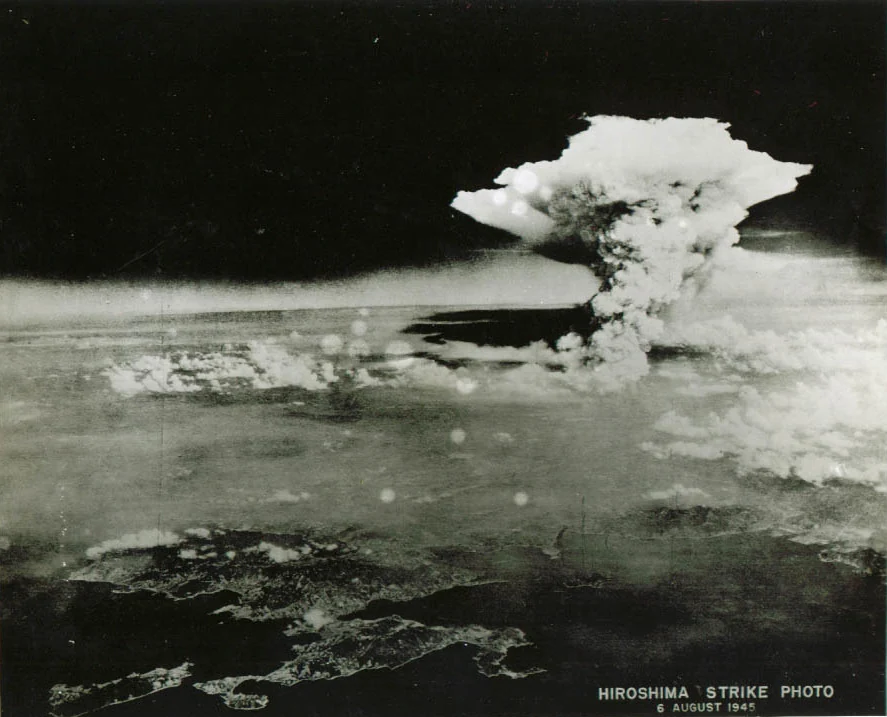
A study published on October 28, 2026 estimates that the top of the smoke plume from the Hiroshima firestorm exceeded 11.3 km with 95% confidence, 97 minutes after the atomic bomb detonated on August 6, 1945. The result is a lower bound for that moment.
A flight log and a line of sight
David M. Romps, Rusen Öktem and Zhenyu He used the Enola Gay navigator’s log, which records when the crew lost sight of the cloud. The researchers identify it as the smoke plume fed by fires in Hiroshima. A military memorandum describes haze limiting visibility. The team used the aircraft’s estimated position and altitude, Earth’s curvature and the bending of light in the atmosphere to calculate the height at which the plume would just have been visible over the horizon. A plume obscured by haze could have stood higher. View the Hiroshima Peace Memorial Museum photograph.
What the lower bound tells us
The team used 100,000 calculations to account for uncertainty in distance, aircraft altitude and atmospheric conditions. The median of the calculated lower bounds was 12.1 km. The one-sided 95% lower bound of 11.3 km puts the plume top well into the upper troposphere. The calculation leaves the maximum height and the amount of soot that reached the stratosphere undetermined.

