Returning to the same sampling points made soil carbon changes easier to detect
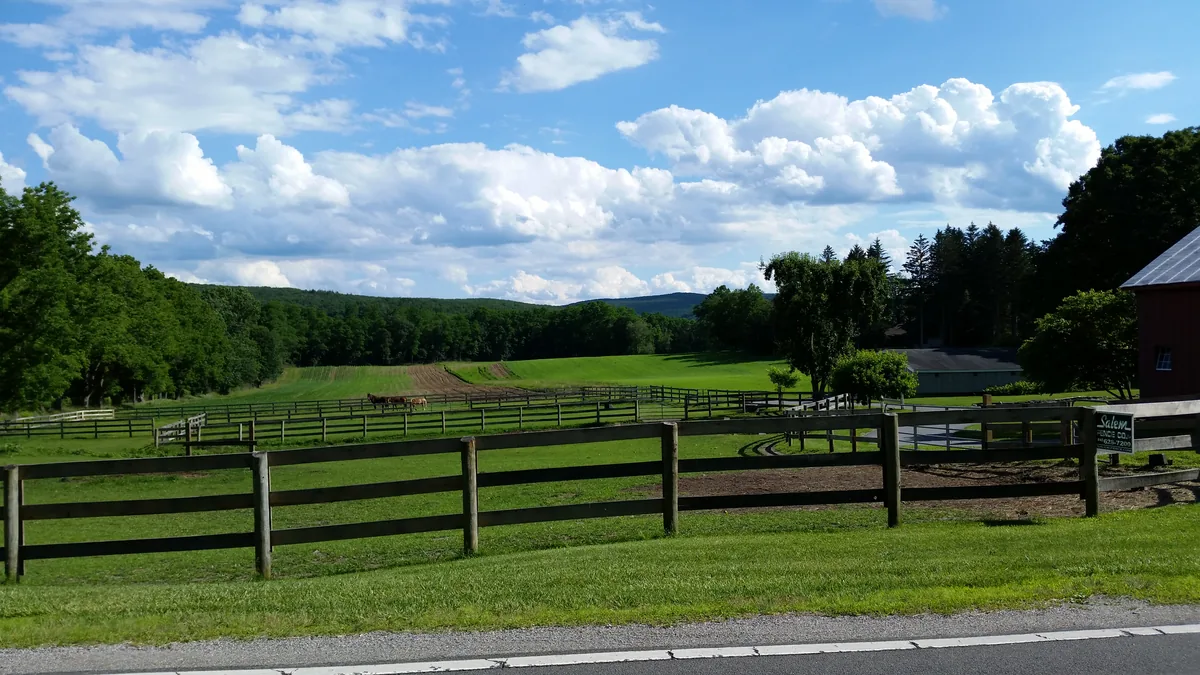
On 80 Hudson Valley fields, returning to marked sampling points cut the smallest detectable difference in topsoil carbon concentration to about one-sixth of the estimate based on spatial variation alone.
Yale School of the Environment report, October 30, 2026
Two winters at the same locations
Yale School of the Environment reported on October 30, 2026, on a Geoderma study led by Alexander Polussa in New York’s Hudson Valley. The researchers sampled 80 working fields, 40 under regenerative agriculture and 40 under conventional management. They collected 1,592 soil samples from 796 marked locations in the winters of 2023–24 and 2024–25 and measured carbon concentration in the top 15 cm of soil.
What repeated sampling revealed
Soil carbon concentration varied across fields and even within the same field. The team returned to the same points and calculated how much each field had changed. Persistent differences between locations then had less influence on the comparison. In the researchers’ analysis, the smallest detectable difference fell from 0.33 to 0.056 percentage points of carbon concentration compared with an estimate based on spatial variation alone.
What the study measured
The measurements describe the proportion of carbon in surface soil. Estimating how much carbon a field stores would also require knowing the mass of soil represented. The estimated difference in change between the two management groups was about 0.04 percentage points in favor of the regenerative fields, with a range of statistical uncertainty that included zero. Two sampling rounds about a year apart leave the long-term effects of either approach open.
