Europe’s Hera spacecraft sends back its first close-up of the Didymos asteroid pair
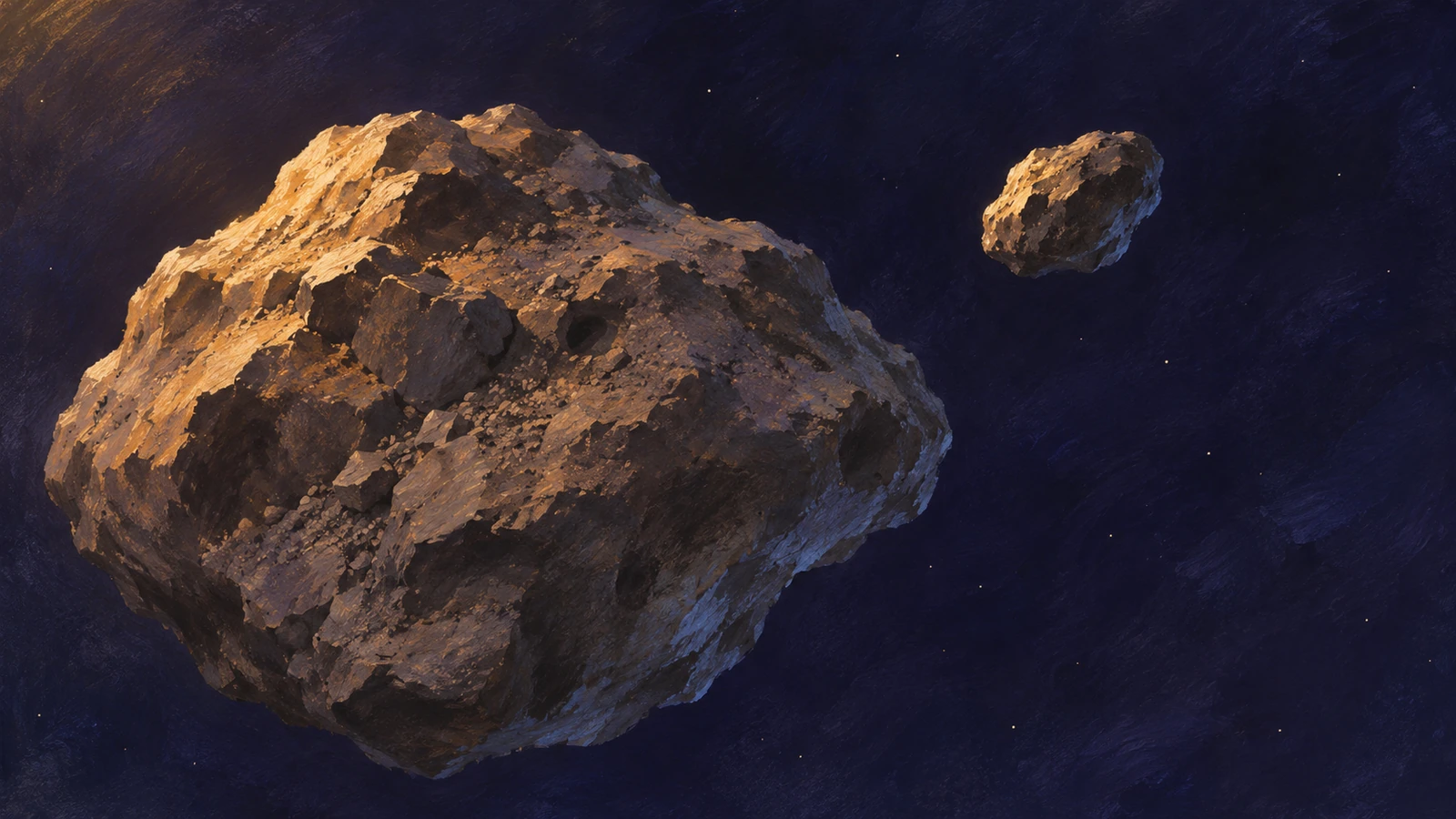
On 5 November, the European Space Agency released the first close-up of the asteroid pair taken by its Hera spacecraft. The larger asteroid, Didymos, is clearly visible, while most of its smaller companion, Dimorphos, lies in shadow. ESA announcement
A different side of Didymos
Hera photographed the side opposite the one NASA’s DART spacecraft saw shortly before its impact. ESA’s team identified an equatorial ridge, boulders, craters and features that resemble grooves or ridges. Some may be linked to debris that travelled from Dimorphos after the impact. Their origin is still under investigation.
Following up on a 33-minute change
NASA deliberately struck Dimorphos on 26 September 2022. Its analysis found that the smaller asteroid took about 33 minutes less to complete one orbit around Didymos. NASA orbital analysis
Hera will study both bodies up close to help researchers estimate how much a future spacecraft impact could deflect an asteroid. ESA plans to unveil detailed images on 25 November.
Related article: How NASA’s DART impact changed an asteroid’s orbit