Antarctica’s 2026 ozone hole ranked seventh by area
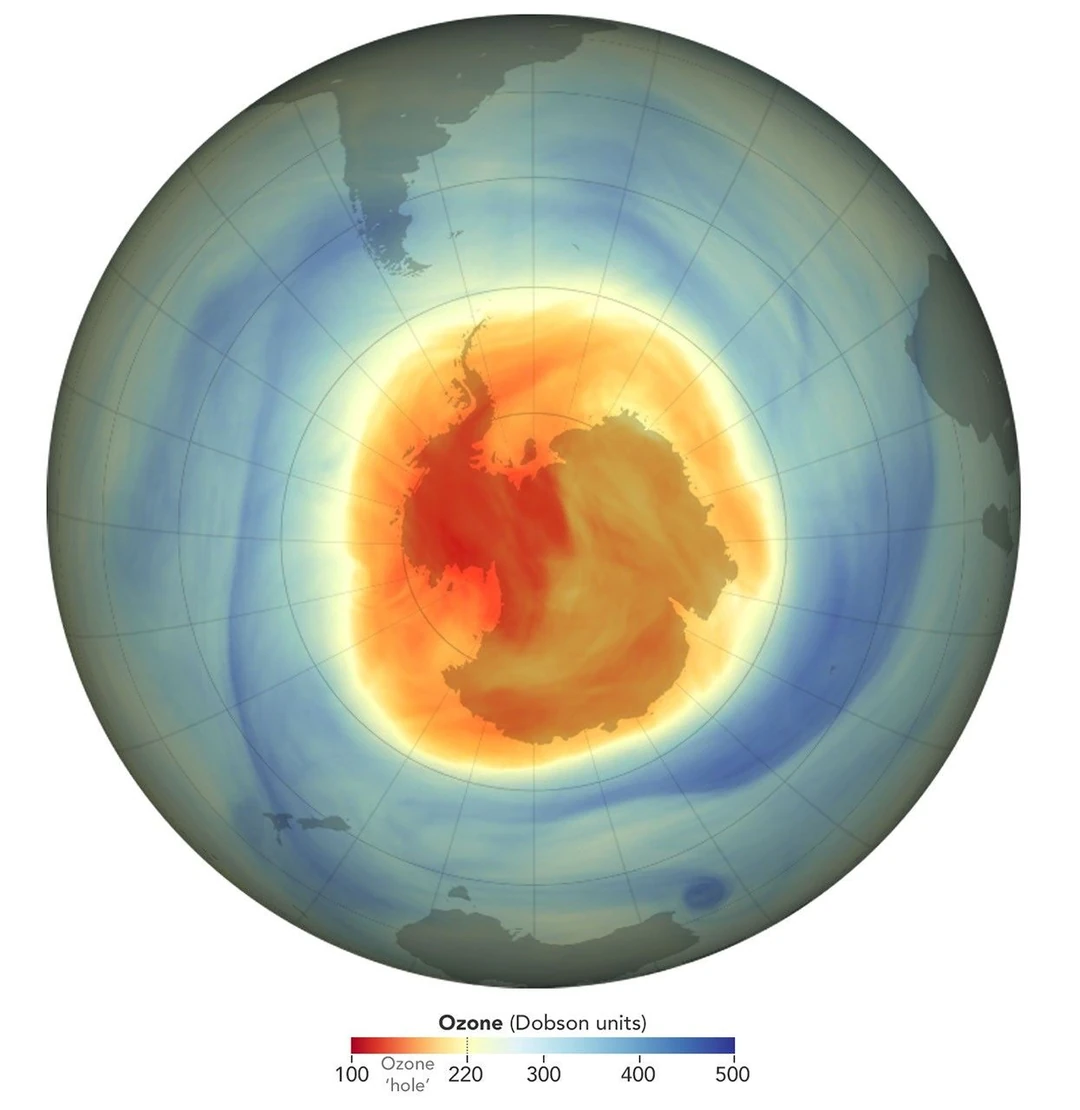
NASA and NOAA reported on November 4 that Antarctica’s 2026 ozone hole ranked seventh by area in 48 years of monitoring. It reached about 27.1 million square kilometers on September 18.
Measuring area and overhead ozone
The hole averaged about 25 million square kilometers from September 7 through October 13. Satellite observations identify the area where total ozone falls below 220 Dobson units. At the South Pole, balloon instruments recorded a seasonal low of 105 Dobson units on October 17. The lowest recorded there was 92 in October 2006.
Weather conditions matter from year to year
Researchers attributed this year’s large area in part to an unusually strong polar vortex. It maintained cold conditions that favor ozone depletion. NASA and NOAA said controls under the Montreal Protocol continue to support long-term recovery.