OpenAI’s Control Room cuts off model output for research jobs within 35 seconds, company says
OpenAI described Control Room on November 9, 2026. The system is already deployed across its research infrastructure. OpenAI says a stop instruction takes at most 35 seconds to cut off further model output for the affected job.
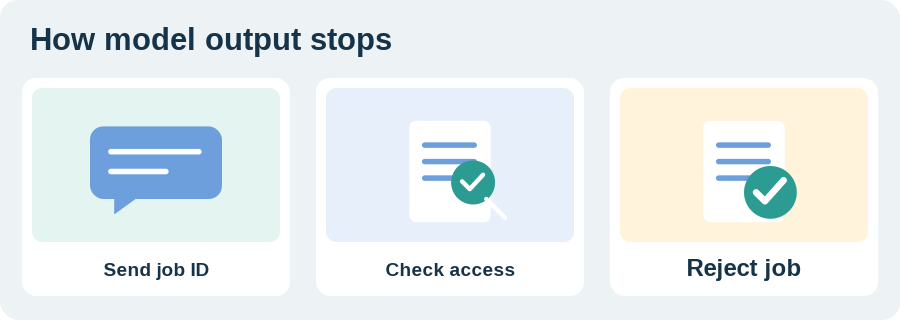
The inference engine checks the job ID
A research job registers with Control Room to get an ID. Whenever it requests model output, it sends that ID to the inference engine. The engine checks whether the job has permission to generate. A researcher or an automated monitor can send a stop instruction. Once the engine learns that the job has been stopped, it rejects its requests. The research process itself can keep running, and other authorized jobs can still use the same engine.
Where the 35 seconds come from
To handle request volume, the engine can reuse a recent authorization decision from a cache. OpenAI attributes the delay to that cache and counts the 35 seconds from when Control Room receives the stop instruction.
How the system handles an outage
OpenAI says engines configured for this safeguard reject inference requests while Control Room is unavailable. At the time of the announcement, this behavior was enabled for all frontier-model research jobs, with rollout to the remaining research jobs planned over the following days.
