Simulated phishing clicks rose after the spring clock change at UC Irvine

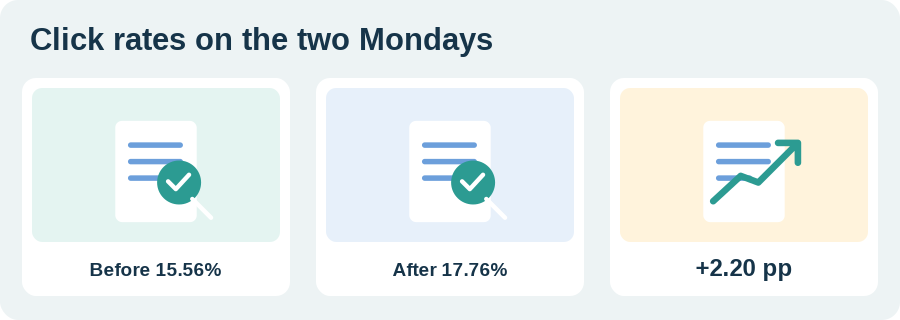
In a 2026 workplace experiment at the University of California, Irvine, 17.76% clicked a link in a simulated phishing email on the Monday after the start of daylight saving time, compared with 15.56% one week earlier. The difference was 2.20 percentage points.
The two Monday groups
The study randomly assigned 11,218 UC Irvine employees to receive the message on one of the two Monday mornings. The paper reported no detected change in email opens or spam reports.
What the comparison can show
The result measures clicks on a simulated message at a single workplace. It does not establish how much sleep each employee lost or how often a real attack would succeed. For security teams, the comparison shows why opens, clicks and reports should be read as separate outcomes.

