Saint-Gobain and Microsoft identify possible molecules for cement additives

Microsoft announced on November 10 that it and building materials maker Saint-Gobain had identified several molecules that might be used in an additive for lower-carbon cement. The joint team gathered 62,000 patents and 44,000 abstracts and used AI to organize them into a resource for searching and analysis.
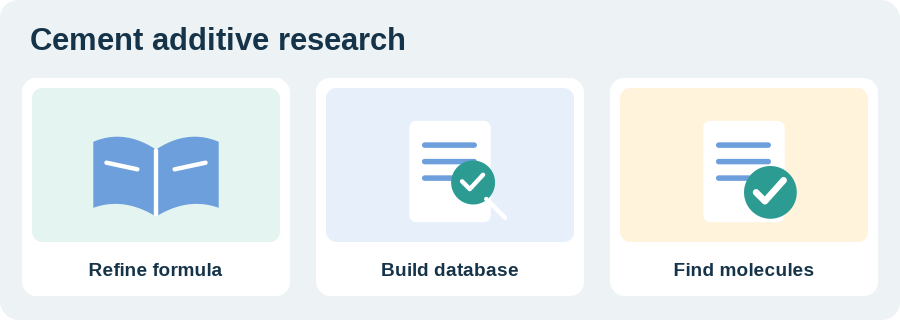
From refining an existing formula to looking for new molecules
The collaboration began around 2024. In its first phase, the team used the existing ingredients to refine a cement additive intended to cut carbon dioxide emissions while maintaining or improving the strength of the resulting concrete. Saint-Gobain then began looking for new molecules that could improve the additive’s performance. Engineers and researchers from the two companies gathered material on cement chemistry while testing Microsoft Discovery, a research platform that Microsoft had prepared for private review in spring 2026.
Several candidate molecules and possible formulations within weeks
Mojdeh Rastgoo-Lemaitre, who works on digital research at Saint-Gobain, estimated that building a knowledge base from the patents and abstracts would have taken researchers about a year by hand. She said it took a few hours with AI. In summer 2026, the team went on to identify several candidate molecules and propose possible formulations within weeks. The announcement gave no names for the candidates, concrete strength test results or measurements of emissions reductions.