DeepMind checks Signal’s cryptography at the machine-code level

On November 10, Google DeepMind reported a formal verification of key security properties of libsignal, the library that implements the Signal protocol. The researchers checked a command-line program compiled for 64-bit Arm Linux.
What the team verified
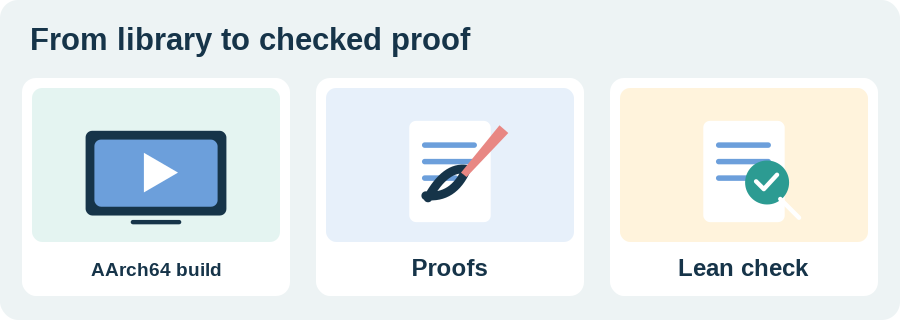
The researchers linked an unmodified libsignal library into a small command-line program and compiled it for AArch64 Linux. AlphaProof Code used AI agents to generate mathematical proofs about the resulting machine code. Lean, a proof assistant, checked those proofs against a specification approved by the researchers.
What the proofs cover
The paper examines the initial key agreement and the Triple Ratchet, which updates keys as a conversation progresses. Under the paper’s threat models, the authors report proofs that include forward secrecy and post-compromise security. The former protects earlier messages if a later key is exposed. The latter describes how later messages can regain protection as keys are refreshed, under the conditions stated in the paper.
Where the guarantees apply
The proofs apply to the executable and conditions described in the paper. They rely on assumptions about the underlying cryptographic operations and some routines called by the program. The full Signal app and builds for other platforms fall outside the study’s scope.
