DeepL’s Aure carries speaking pace and emphasis into translated speech

DeepL announced Aure for its real-time voice translation service on November 11, 2026. The company says the model can reflect changes in a speaker’s emphasis and pace during a conversation in the translated voice.
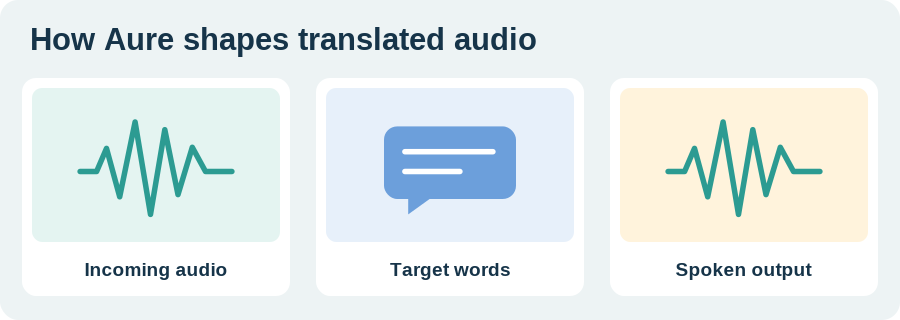
How Aure adjusts delivery
According to DeepL, an initial voice sample previously determined how a person’s translated voice would sound throughout a conversation. Aure continuously analyzes incoming audio alongside the translated words and adjusts how the translated speech is delivered.
Eight languages at launch
DeepL says Aure is applied automatically to DeepL Voice for Online Meetings, DeepL Voice for In-Person Conversations and the DeepL API for Voice. The model initially supports English, German, Spanish, French, Italian, Japanese, Portuguese and Korean. DeepL Voice continues to use its existing models for other supported languages.