Unequal beams spread impact in 3D-printed samples
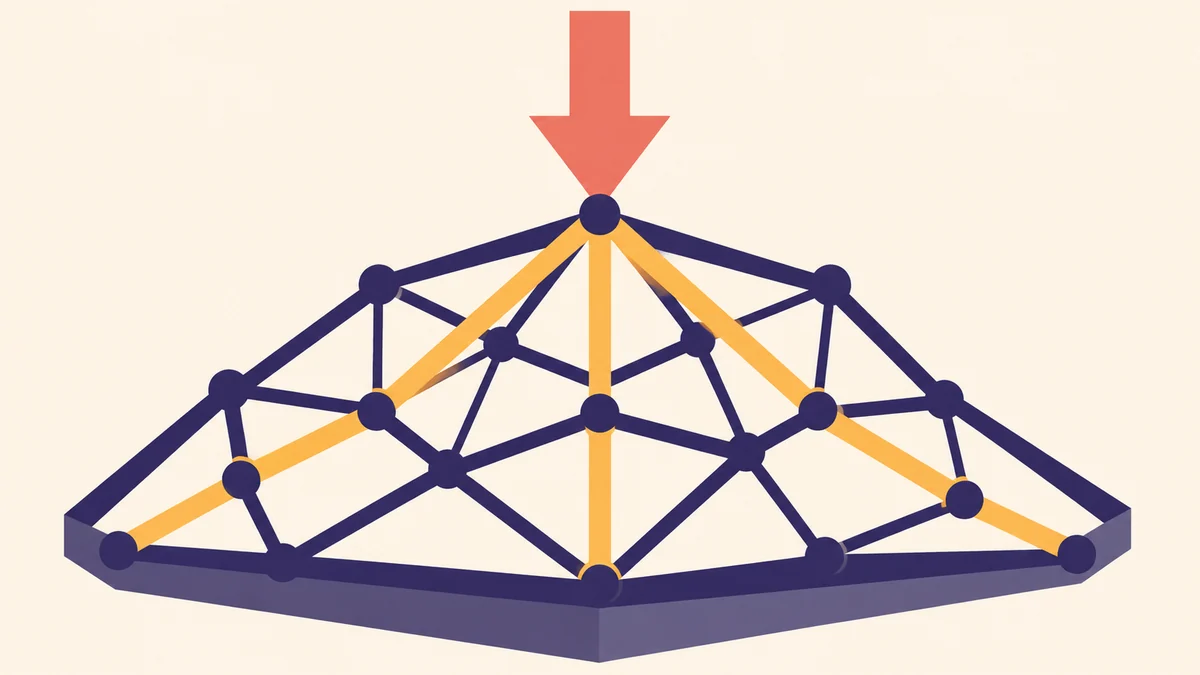
In drop-weight tests, a 3D-printed polymer network made of beams of varying lengths and thicknesses dissipated more energy per unit mass and transmitted a lower peak force than the other structures tested.

How the samples deformed
Nature published the study by Both, Chen and colleagues on November 11, 2026. The team compared samples at 40% relative density and an impact speed of about 4 m/s. Deformation concentrated in bands in the square and hexagonal lattices and spread more widely through the beam network. Relative density compares the density of the sample with that of the solid polymer.
What the tests establish
The findings apply to the samples and conditions studied. Performance under product standards remains to be tested for finished helmets or packaging. See the official sample photos