TeCoBot prototypes bend and link up to carry objects and cross obstacles
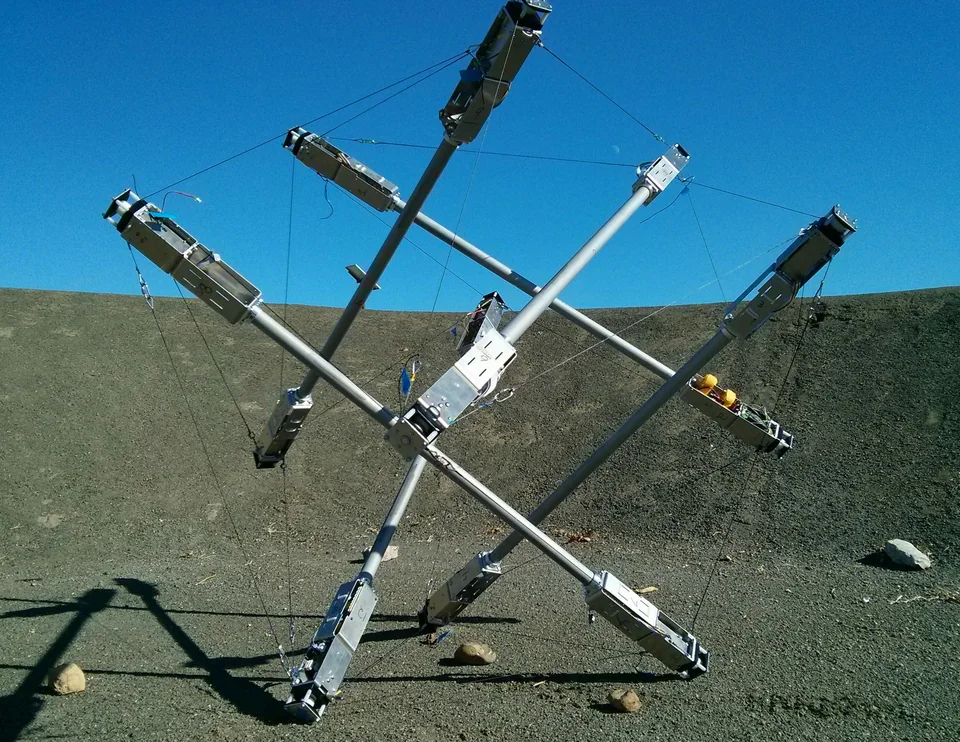
Colorado State University researchers built flexible robots that join with claws to form chains, loops and branches. The team tested autonomous docking between two units using a camera and visual markers. The group demonstrations used remote control.
Nature Machine Intelligence – published study
A body that bends and claws that connect
Each TeCoBot has rigid carbon-fibre rods held in an elastic network, a structure known as tensegrity. Pulling three control cables by different amounts bends the body, while pulling them together shortens it. The claws at the two ends can grip objects or latch onto another robot. The study appeared online in Nature Machine Intelligence on 11 November 2026.
Why the shape matters
In one demonstration, two branches of a Y-shaped group held a box while the rear robot moved it forward. In another, a chain of robots rolled over a log outdoors. The research team used different configurations to share the load or cross an obstacle.
What the camera controlled
In the two-robot docking test, one unit used its onboard camera to detect visual markers on the other, adjust its heading, approach and close its claw. This test covered the docking step. The researchers used remote control to reconfigure robots during the cooperative experiments.
