Independent analysis recovers the ring around black hole M87*
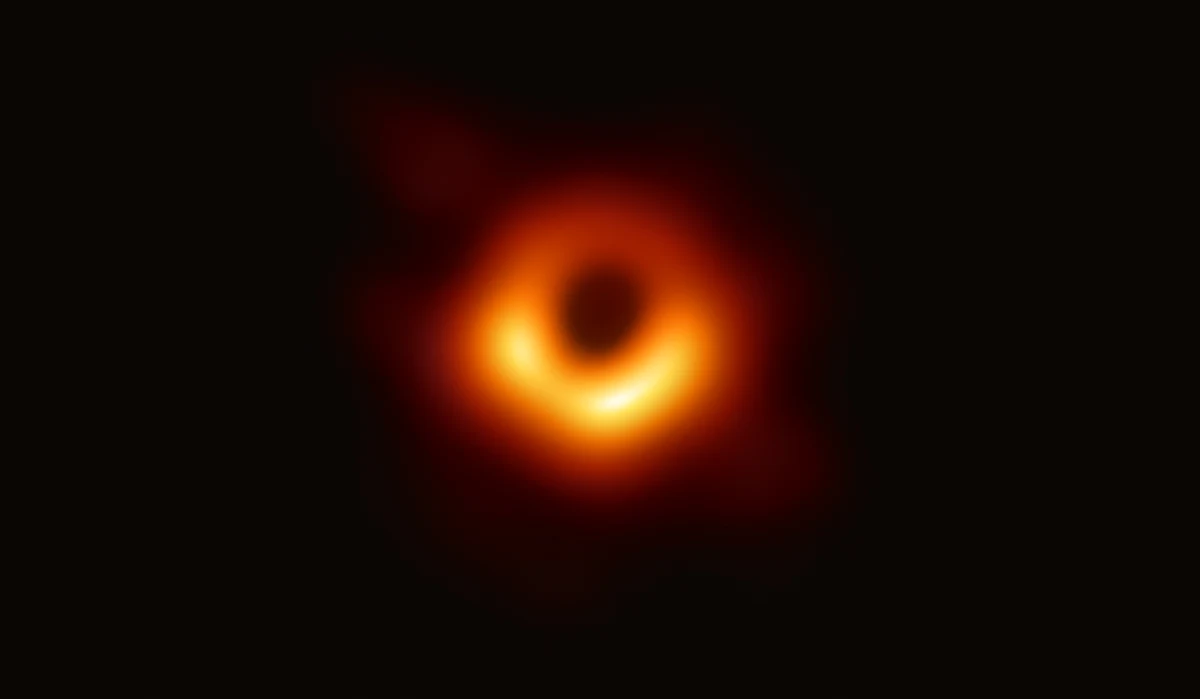
An Australian team reanalysed Event Horizon Telescope observations and recovered the bright ring around M87*. The reconstructed ring measured 42.2 ± 1.5 microarcseconds across.
Nature — Original study by Lai and colleagues

A fresh look at the original observations
The Event Horizon Telescope (EHT) collaboration published its first image of a black hole’s shadow in 2019 using radio observations collected in 2017. The image showed a bright ring around a dark centre in the galaxy Messier 87. Samuel Lai and colleagues at Australia’s CSIRO went back to the EHT measurements to see whether the ring would reappear with a different reconstruction method. Their study was published in Nature on 11 November 2026.
Combining signals from groups of telescopes
Very-long-baseline interferometry combines signals from distant radio telescopes. The measurements cover only part of the information needed to make an image, and calibration errors at individual telescopes can distort the data. The team’s GenDIReCT method combines measurements from groups of telescopes so that station-specific calibration effects cancel. It uses these combinations to guide the reconstruction without imposing a ring shape in advance.
The ring reappeared
The reconstructed image recovered a ring 42.2 ± 1.5 microarcseconds in diameter, close to the roughly 40 microarcseconds reported by the EHT team in 2019. The agreement strengthens the evidence for the ring’s overall shape. It is a check using a separate analysis of the original observations, so it tests how much the result depends on the way the image is reconstructed.