New term strengthens quantum uncertainty bound, with equality for two-level systems

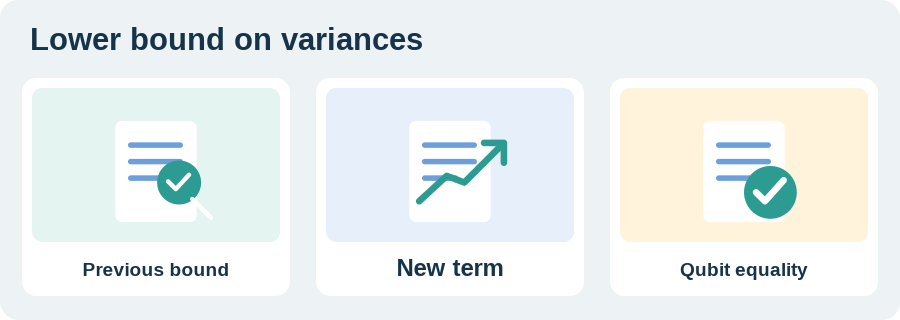
Researchers including a Tohoku University team added a term arising from noncommutativity to an inequality constraining the spread of measurements of two observables. For two-level systems such as qubits, the resulting bound equals the product of variances.
Measuring identically prepared states
On 11 November 2026, Tohoku University announced theoretical work led by Professor Gen Kimura. The paper appeared in npj Quantum Information on 21 September. It concerns preparation uncertainty. If the same quantum state is prepared repeatedly and observables A and B are measured in separate trials, each distribution has a variance. The Robertson–Schrödinger relation provides a lower bound on the product of those variances.
Why two-level systems reach the bound
The researchers used the commutator, which captures the effect of changing the order of A and B, to add a nonnegative term to the established bound. This state-dependent term exposes a contribution that the earlier bound misses in mixed states. For any state and any pair of observables in a two-level system, the right side of the new relation equals the product of variances. The paper proves this mathematically and discusses possible experimental tests.

