EFSA finds five of eight assessed Alternaria toxins can damage DNA
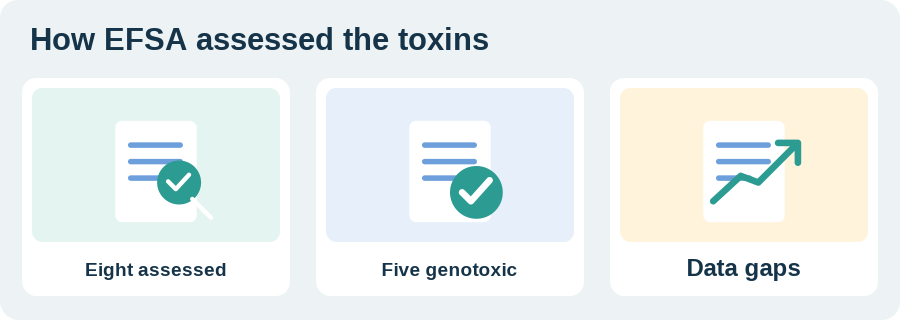
On 11 November 2026, the European Food Safety Authority (EFSA) published an updated assessment of eight toxins made by Alternaria moulds that can contaminate food and animal feed. It classified five as genotoxic, meaning they can damage DNA.
Two toxins exceeded a screening threshold
For two of the five, AOH and AME, estimated average long-term intake exceeded the toxicological screening threshold of 2.5 nanograms per kilogram of body weight per day in most population groups. The panel lacked enough data on levels in food to apply the same screening method to the other three.
The findings differ by toxin
For ALT and TEN, adverse effects were considered unlikely at current estimated dietary exposures. The panel could not determine whether tenuazonic acid (TeA) damages DNA. For its other effects, the panel was 98% certain that estimated dietary exposure in every population group would stay below the relevant screening threshold.
