What stable, longterm and EOL mean for the Linux kernel, according to kernel.org

In its FAQ dated 12 November, the Linux kernel distribution site kernel.org explains kernel maintenance categories and the handling of device firmware. The label “longterm” identifies a series that receives fixes over an extended period. “EOL” means fixes for that series have ended.
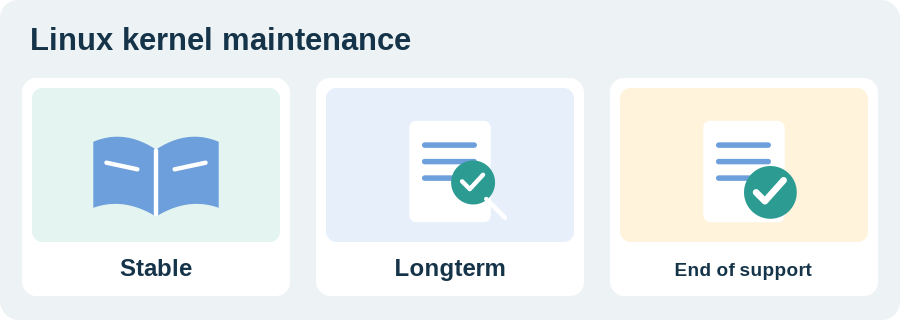
A longterm release can appear under the stable label
A kernel series that moves from a new mainline release into stable maintenance may reach the end of support after a few bug-fix releases or continue receiving fixes as a “longterm” series. When there is no other current stable release, the distribution site's home page lists a longterm release as “stable”. The FAQ says this keeps monitoring software that expects a stable entry working.
The kernel and device firmware are distributed separately
The Linux kernel is distributed under version 2 of the GNU General Public License. When a driver starts, it may load firmware supplied by the manufacturer onto the device. According to the FAQ, redistribution of some firmware is allowed only in binary form. The corresponding files are stored in the separate linux-firmware repository.
Git tags and release archives carry separate signatures
Linus Torvalds signs the Git tags for new mainline releases with PGP. The stable release team signs the compressed release archives separately. According to the FAQ, the signed files typically appear on the distribution site several hours after the Git tag is created.