Ethical consumption in Japan: 29.9% aware, 25.6% say they practice it

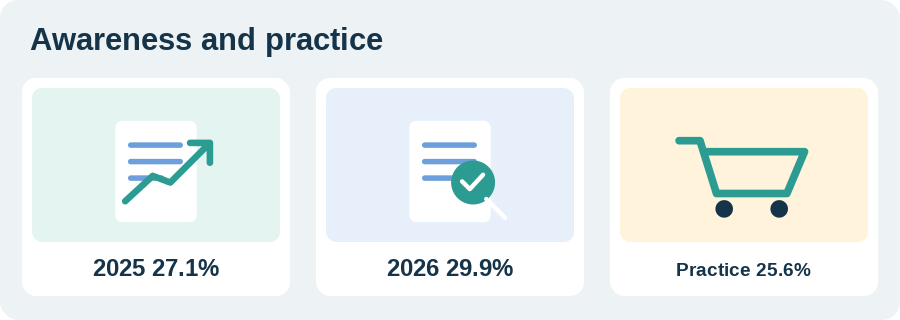
In a survey published November 12, Japan's Consumer Affairs Agency found that 29.9% said they knew of ethical consumption and 25.6% said they practiced it often or sometimes.
Awareness includes knowing the term alone
The online survey ran October 1–5, 2026, among 5,000 people aged 15 and older in Japan. Respondents were allocated by sex, age and region in line with population shares. Some 8.9% knew both the term and its meaning, while 21.0% knew the term but not its meaning. Their combined 29.9% was 2.8 percentage points above the prior year's 27.1%.
Practice is self-reported
The questionnaire described ethical consumption as choices considerate of people, society, local communities and the environment. It cited buying local produce and recycling used goods as examples. All 5,000 respondents answered the practice question. Some 3.3% said they practiced it often and 22.3% said they did so sometimes. The practice rate comes from respondents’ own answers rather than purchase records.

