AquaWeave shows how water can curl or separate woven fabric
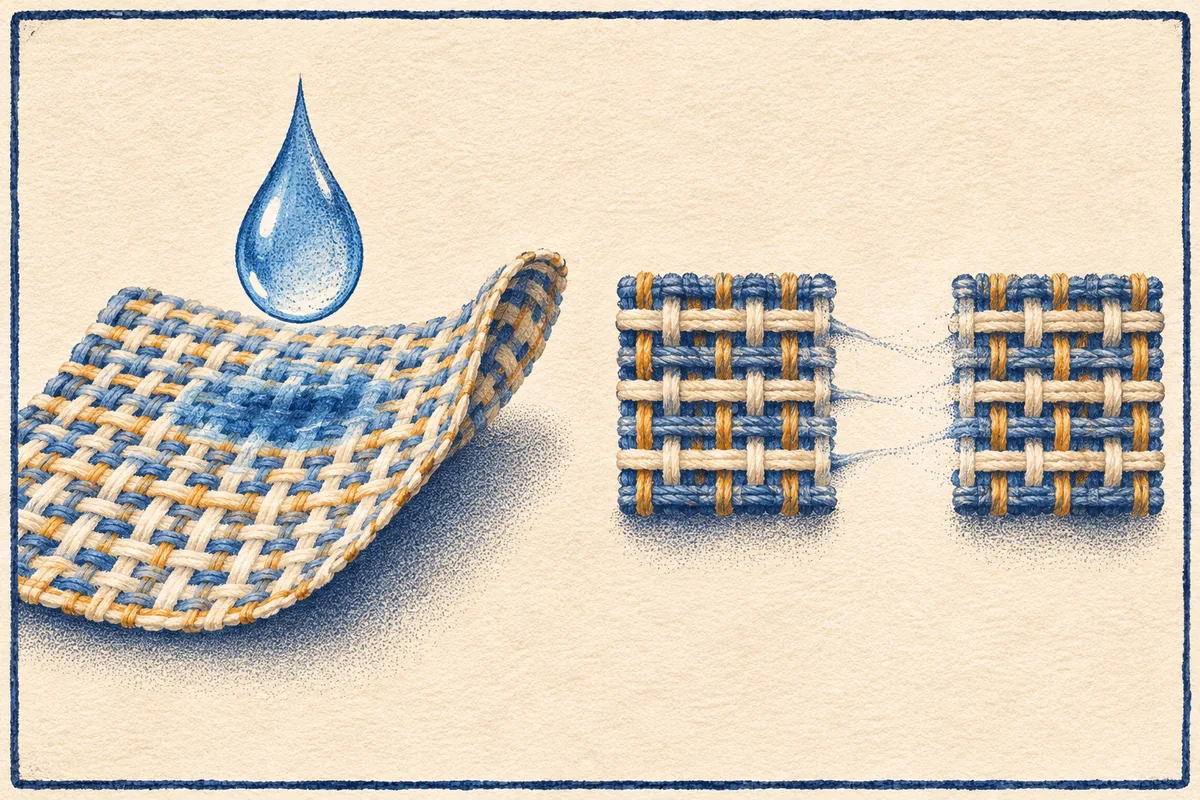
At Cornell University, the AquaWeave team made a kitchen cloth that curls when wet and flattens as it dries, and a double-layer coaster that splits in two when hot water dissolves the joining yarn.
Two yarns, two changes
The researchers used cotton for the threads running lengthwise and placed the responsive yarn across them. In the kitchen cloth, alginate yarn swelled in room-temperature water (20–24 °C). Its placement in the weave made parts of the cloth curl, creating a textured surface for scrubbing. As it dried, the cloth returned toward its original flat shape.
When the joining yarn dissolves
A different weave used gelatin-based yarn to hold the two layers of a coaster together. In lab tests, samples of that yarn pretreated with sodium carbonate dissolved in water at 40, 60 and 80 °C. In the prototype, hot water released the layers and left two separate coasters. Drying could not rejoin them. See the official prototype photos.
What the trials covered
The paper also describes a chitosan yarn that swelled slowly in acidic conditions. The remote workshop involved five textile practitioners and used alginate yarn only. Cornell discussed AquaWeave on November 12 after its presentation at UIST 2026 in Detroit. The study demonstrates prototype behaviors. Durability in everyday laundering remains unverified.