AlphaGenome 2 predicts how DNA variants affect specific cells

Google DeepMind introduced AlphaGenome 2 on November 11. The research model predicts how DNA variants can change gene expression in particular cell types or states.
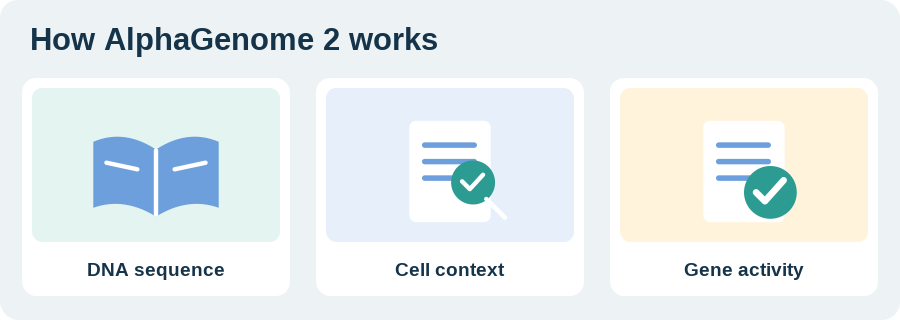
One sequence, different cell states
The model takes a stretch of about one million DNA bases and a specified tissue, cell type or cell state. It predicts how active genes are and how accessible DNA is in that setting. Its training drew on data from both humans and mice, including single-cell measurements and measurements pooled across cells.
What the immune-cell test showed
The team tested predictions of gene expression across 28 immune cell types in the TenK10K dataset. At 90% precision, AlphaGenome 2 recovered 30% of the variants the benchmark identified as likely to cause changes in gene expression, up from 16% for AlphaGenome 1 adapted to single-cell data. DeepMind made the model available through its API for non-commercial research. The benchmark measured predictive performance for research, and clinical use would require separate validation.
