Telescopes in Chile capture a brightening supernova in NGC 1433
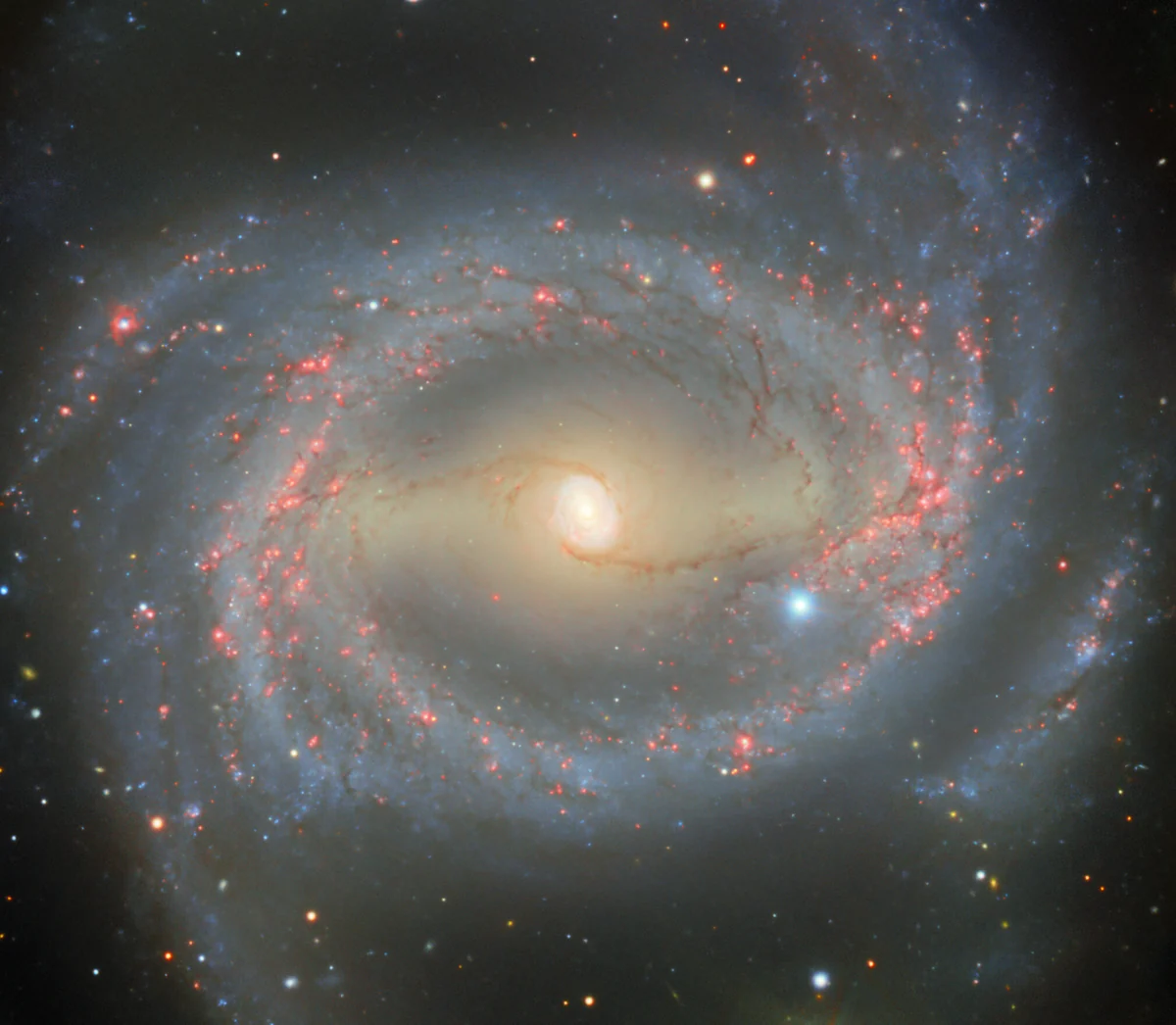
NSF NOIRLab released images of supernova SN 2026ahvu on November 12, 2026. Gemini South and the Dark Energy Camera in Chile photographed the explosion in NGC 1433, a galaxy roughly 50 million light-years away.
An explosion caught early
NOIRLab says the ATLAS survey discovered the object on November 2. A spectrum taken with Keck II the next day identified a young Type Ia supernova. Its apparent magnitude went from about 17 at discovery to 13.5 within days. Lower values on this scale mean a brighter object.
What astronomers can learn before peak
Earlier Dark Energy Camera images show the galaxy before the explosion. New images can track changes in brightness and colour, while spectra can reveal what the expanding material contains and how fast it moves. The November 12 release estimated peak brightness between November 18 and 23. The timing can vary by observing filter and may change as new measurements come in.