Small waters on a Kizu River sandbar host distinct invertebrate communities
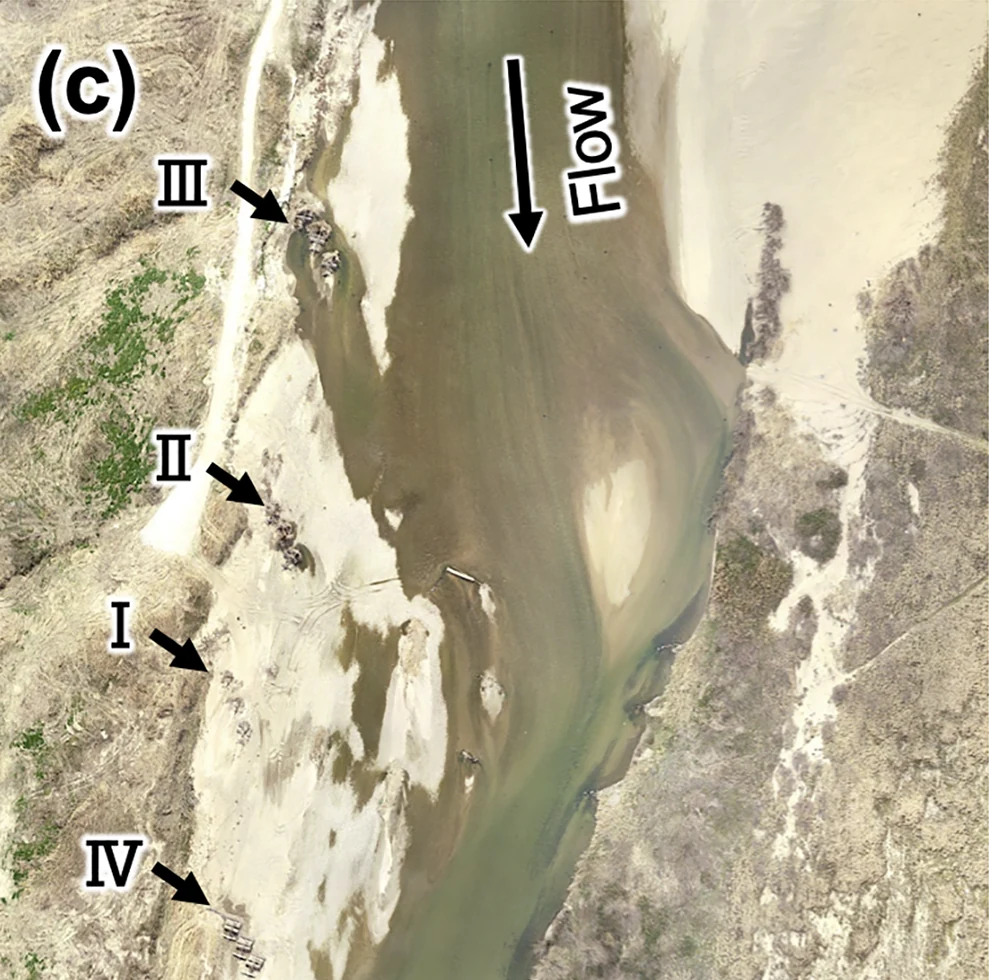
Researchers surveyed waters formed around traditional wooden Seigyu structures on Japan’s Kizu River. Water conditions and riverbed invertebrates varied across sites and seasons, even within a few dozen metres.
Five surveys across one sandbar
From June 2020 to June 2021, the team surveyed connected backwaters and pools isolated from the main channel five times. Each visit covered 8–14 sandbar sites and one adjacent main-channel site for comparison.
Different habitats, with a clear limit to the evidence
Communities in the small waters differed from those in the main channel, and many taxa were found only in those waters. The researchers point to the value of maintaining conditions that allow varied waters to form and keep changing. The survey covered one sandbar and did not isolate the effect of installing Seigyu structures.