Phosphorus deficiency suppresses expression of a fungal gene that helps colonize roots

The University of Tokyo and its partners reported on November 12 that the Ct3 strain of a fungus suppresses expression of NFC1, a gene involved in colonizing Arabidopsis roots, under phosphorus deficiency. Comparisons with gene-deletion strains implicated the transcription regulator CtPHO4.
NFC1 matters when phosphorus is sufficient
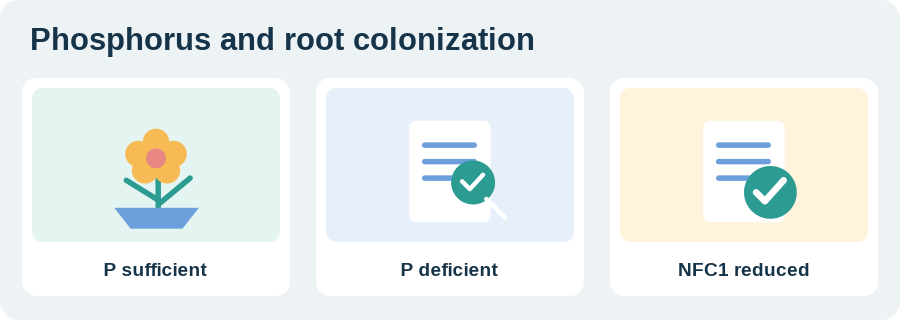
The team inoculated Arabidopsis thaliana with the Ct3 strain of the fungus Colletotrichum tofieldiae under sterile experimental conditions. With sufficient phosphorus, the strain lacking NFC1 had less fungal biomass in roots than the wild-type strain. Restoring NFC1 restored root fungal biomass. Under phosphorus deficiency, the team found no significant difference in root fungal biomass between the NFC1-deletion and wild-type strains.
CtPHO4 suppresses NFC1 under phosphorus deficiency
Under phosphorus deficiency, the strain lacking CtPHO4 expressed more NFC1 than the wild-type strain. The researchers concluded that CtPHO4, which helps the fungus adapt to phosphorus deficiency, suppresses NFC1 expression under that condition. Separate analyses also indicated that NFC1 interferes with the plant’s circadian rhythm, its roughly 24-hour cycle of physiological activity.
Limits of the findings
The results on root fungal biomass and gene expression come from experiments using a particular fungal strain and a model plant. The announcement did not establish whether the same mechanism operates in crops or field conditions.

