POSTECH and Samsung Research display AR text outdoors with a 1.5 mm waveguide
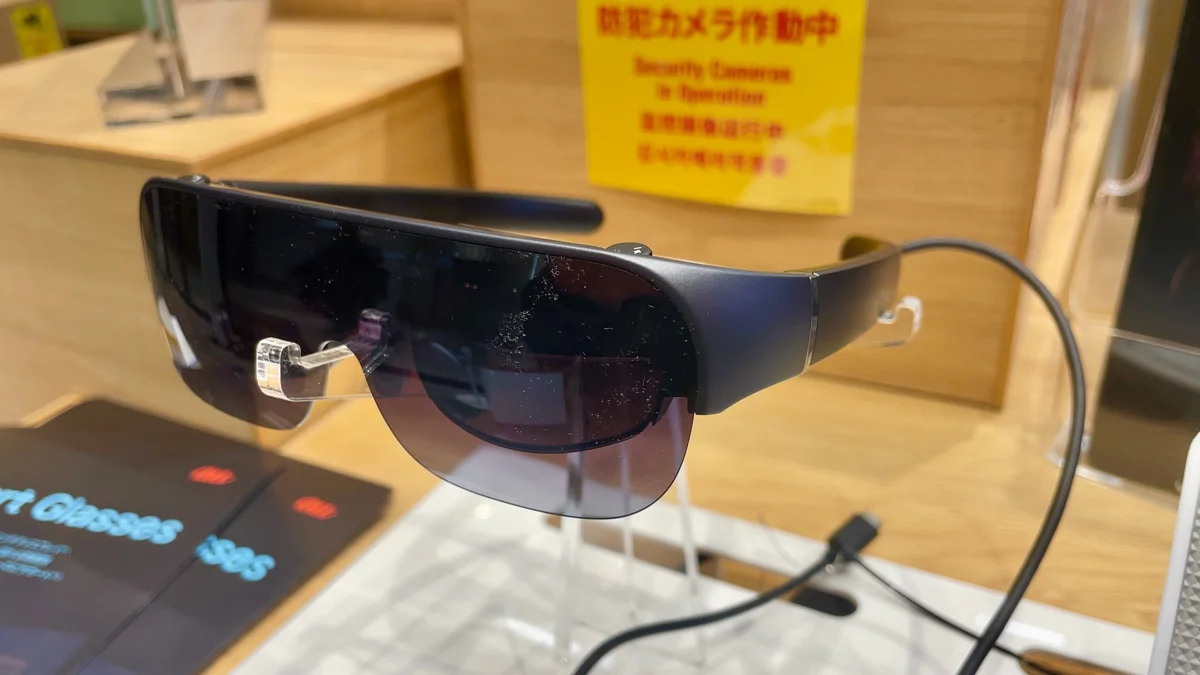
Researchers at POSTECH and Samsung Research displayed white text over an outdoor scene using a prototype augmented reality (AR) headset with a 1.5 mm optical waveguide. Nature published the study online on 11 November.
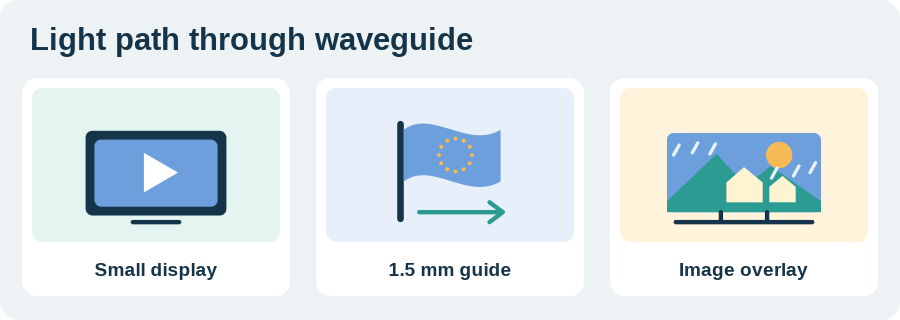
Two layers guide light to the eye
A waveguide directs light from a miniature display to the eye. The researchers used metasurfaces, arrays of structures smaller than a light wavelength, to control light paths through the waveguide and reduce losses. They stacked a layer carrying mainly blue and green light with one carrying mainly red and green light, and also demonstrated colour images indoors.
An 8 × 8 mm eye position range
The prototype had a diagonal field of view of 30°. Its eyebox, the area where the image remains visible, measured 8 mm in each direction. The paper reported luminance efficiency averaging 1,938 nits per lumen of input light, with a maximum of 4,225 nits per lumen. South Korea's Ministry of Science and ICT identified reducing rainbow artefacts from ambient light and improving brightness and colour uniformity as further work.
