How AI interprets Chinese metaphors in an evaluation of 600 sentences

Yufeng Wu of City University of Hong Kong studied how well AI can identify the two concepts in a Chinese metaphor: the subject being described and the concept used to describe it. The study, published in the November proceedings of ROCLING 2026, compared eight conditions using 600 sentences containing metaphors. The paper was also listed in the November 6 oral presentation program for the conference in Hsinchu, Taiwan.
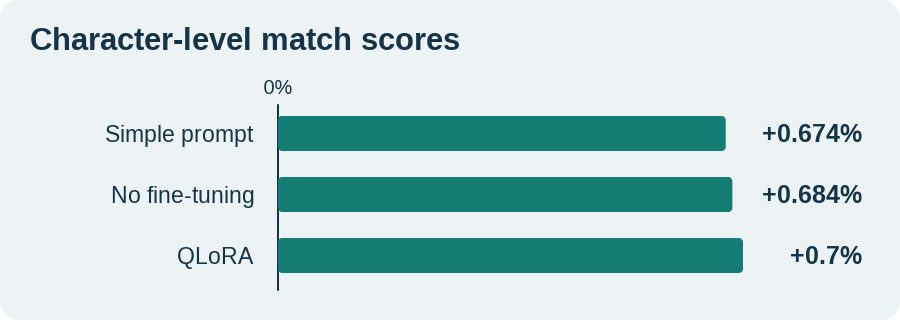
Eight conditions compared using character-level matching
Wu used 600 sentences containing metaphors and their annotations from an existing dataset. The evaluation compared the expressions for the two concepts with the references character by character. Scores were highest when both reference expressions appeared in the input sentence and lowest when neither appeared. The simple-prompt condition scored 0.674. QLoRA, a fine-tuning method, scored 0.700, which was 0.0165 higher than the model before fine-tuning under matched conditions. The study reported a 95% interval of 0.0049 to 0.0283 for that difference.
Both reviewers accepted interpretations without exact matches
In a human evaluation of 40 sampled sentences, two reviewers assessed the concept pairs without seeing the reference expressions or method names. Both reviewers judged 34 of the pairs generated with QLoRA to be valid. Of those 34 pairs, 23 did not exactly match the reference expressions. The study separately evaluated character-level matches and whether interpretations made sense semantically.