Study tests a detector for Sinhala-to-English translations that depart from the source
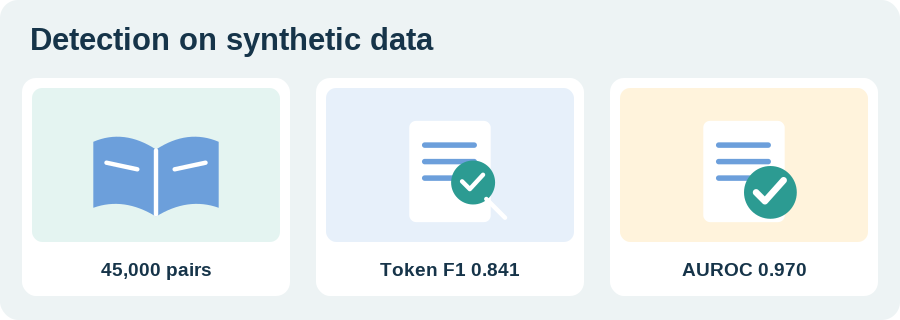
Navam Obeysekara and Nevidu Jayatilleke of Sri Lanka reported a method for detecting Sinhala-to-English machine translations that read naturally but are unrelated to the meaning of the source. In the study, published in November in the ROCLING 2026 proceedings, the detector achieved a token-level F1 score of 0.841 on synthetic data.
The researchers created 45,000 pairs from 7,500 Sinhala sentences
The team began with 7,500 Sinhala sentences and created 45,000 source–translation pairs by deliberately introducing errors into English translations, among other approaches. They split a balanced subset of 15,000 pairs into training, validation and test sets without reusing source sentences across the sets. The mDeBERTa-v3 detector achieved a mean token-level F1 of 0.841 and a standard deviation of 0.001 across three runs with different random seeds.
Swapping or removing the source lowered detection performance
The detector’s sentence-level AUROC was 0.970 with the original Sinhala sentence. It fell to 0.540 when the source was swapped and to 0.507 when the source was omitted. The researchers also ran the same 1,485 sentences through eight translation systems. The detector flagged 51 to 433 translations depending on the system. These counts reflect the detector’s outputs. Human reviewers did not assess which translations were actually wrong in that comparison.