Study tests which speakers and segments contain synthetic audio in a conversation
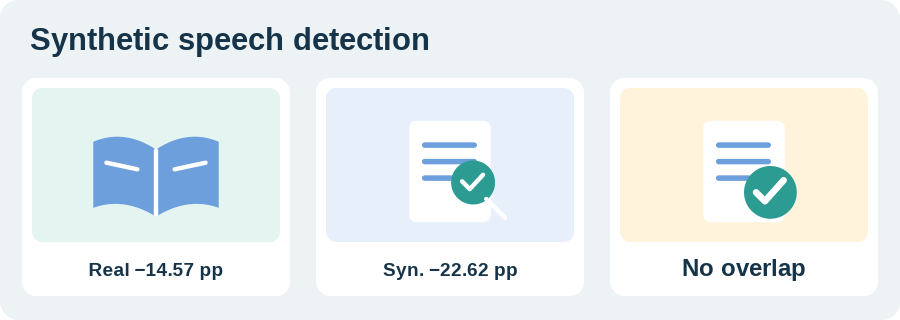
Kelvin Pratama and Wen-Chieh Fang described a method for locating synthetic speech in multi-speaker conversations and identifying the speaker for each segment. The study appeared in November in the ROCLING 2026 proceedings. In a comparison of two setups on the same data, the proposed error rate fell by about 15 percentage points for natural speech and about 23 points for synthetic speech. Error rates remained high, and performance in ordinary conversations has yet to be tested.
Who speaks when and whether speech is synthetic are estimated separately
The researchers prepared multi-speaker evaluation data that included conversations containing synthetic speech in some segments. One process tracked which speaker was active and another classified the audio in 20-millisecond intervals. The two results were then combined. The proposed ADER metric separately tracks time falsely detected, missed or assigned to the wrong speaker for natural and synthetic speech. The metric can exceed 100% because it adds several types of error and divides by the duration of the relevant speech.
The detector still labelled some natural speech as synthetic
With the speaker separation process held fixed, changing the detector reduced ADER from 77.46% to 62.89% on natural speech and from 118.07% to 95.45% on synthetic speech. The authors reported a continuing tendency to mistake natural speech for synthetic speech. The evaluation used conversations assembled from recordings of English read aloud, with no overlapping turns. Further evaluation is needed for natural conversations and other conditions.