Pilot study finds a filter often blocked harmless Traditional Chinese internet slang
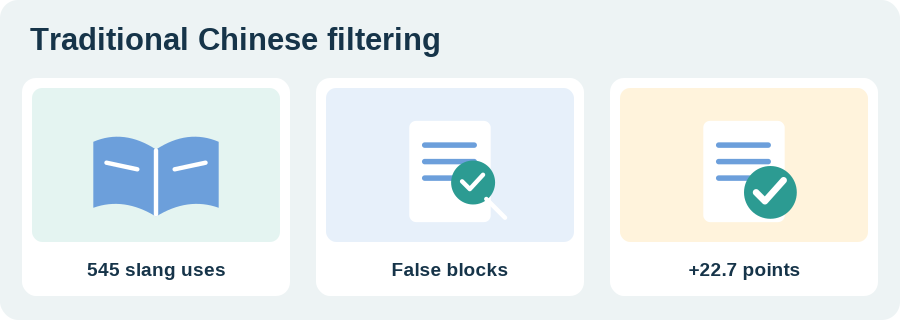
Chen-Chou Ma compared four filters that screen inputs to large language models in Traditional Chinese as used in Taiwan. In the November ROCLING 2026 proceedings, Ma reported that one filter marked 62.7% of test examples containing harmless slang for blocking. That was 22.7 percentage points higher than for matched examples that used standard wording.
Matching slang examples with versions in standard wording
Ma prepared 545 items in Traditional Chinese using Taiwanese internet slang, with a corresponding version in standard wording for each. The study also grouped slang by when it came into use. For the filter that most often blocked harmless slang, the difference from the matched examples was statistically significant and was larger for expressions that entered use later.
Evaluating false blocks and missed detections separately
The paper distinguished mistakenly blocking harmless input from failing to flag input that should be blocked. Ma reported that the presence of slang affected the former, while the latter was more closely related to the language each filter was designed to handle. The pilot study was limited to the Traditional Chinese examples and four filters it tested. Ma identified larger-scale validation as future work.