SNAT2 amino acid transporter helps maintain immune cells’ osmotic balance and regulate inflammation
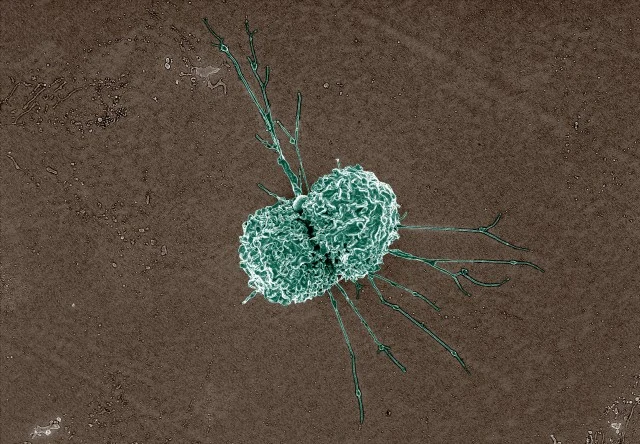
Kyoto University and collaborators reported on November 13 that the amino acid transporter SNAT2 helps maintain osmotic balance inside macrophages, a type of immune cell, and restrains inflammation-associated changes in metabolism. The paper was published in Science Signaling on November 10.
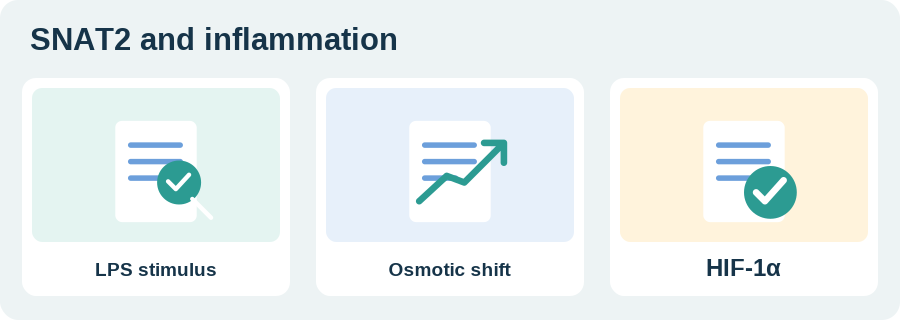
Comparing a bacterial stimulus with low oxygen
The researchers screened many genes in a macrophage cell line. When stimulated with lipopolysaccharide (LPS), a bacterial component, cells lacking SNAT2 showed greater activity of HIF-1α, a regulator of metabolism. The same change caused by SNAT2 loss was not observed under low-oxygen conditions. Adjusting osmotic balance with a substance other than an amino acid reduced the excessive HIF-1α activation under LPS stimulation. View the figure in the joint announcement
Findings from cells and mice
Under high-osmolality conditions, macrophages lacking SNAT2 showed stronger activation of the inflammasome, a protein complex that promotes the release of inflammatory substances. After infection with Listeria bacteria, mice lacking SNAT2 in myeloid cells, including macrophages, had fewer bacteria in their organs than control mice. These findings come from cell and mouse experiments; therapeutic effects in humans were not investigated.
