AI tracks when medaka lose balance under temperature stress
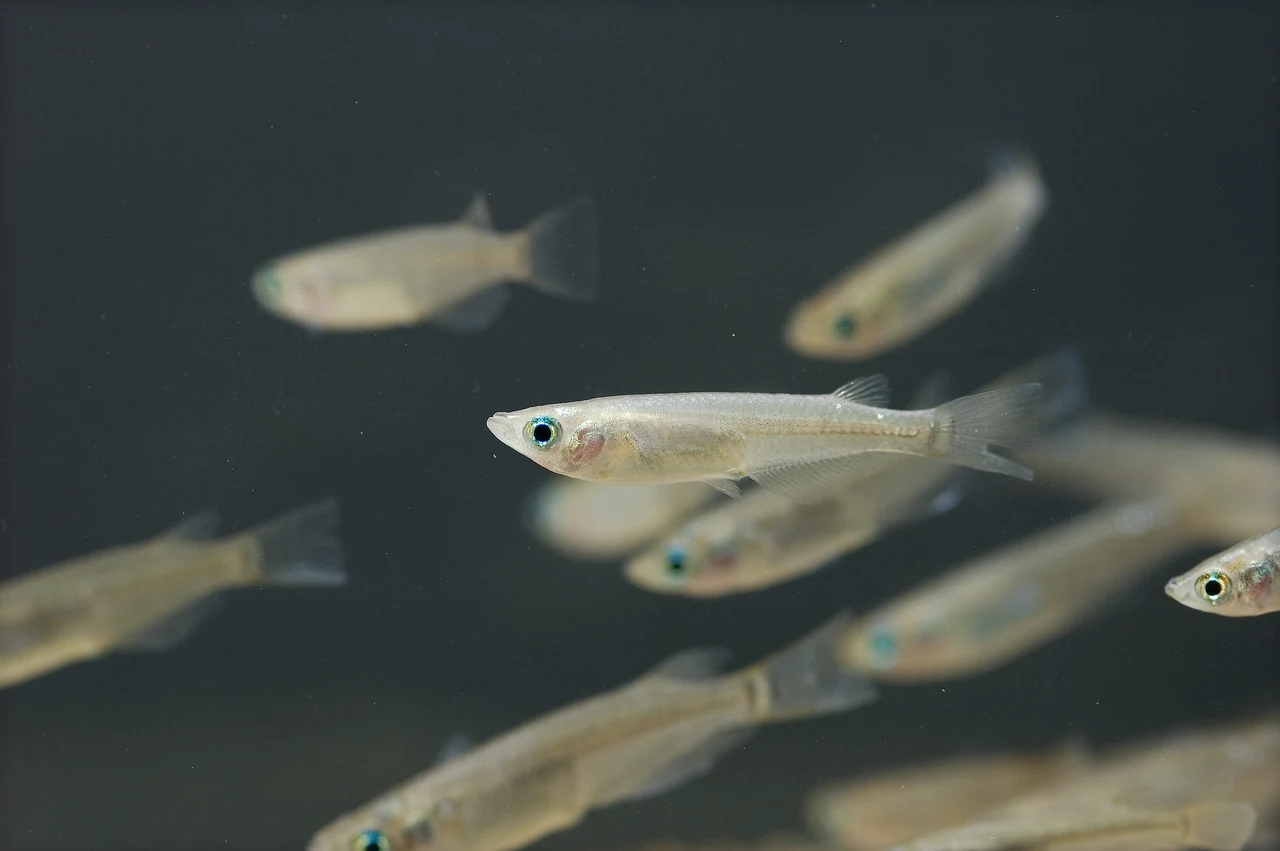
A study published on 10 September 2026 tested video analysis as a way to time loss of equilibrium in medaka. Its agreement with an experienced observer was close to the variation between two experienced observers.
How the measurement works
Researchers from Nagoya University and the University of Fukui filmed one fish per compartment from above. DeepLabCut tracked seven body landmarks, and a classifier combined those positions with video frames. The team scored loss of equilibrium (LOE) when a fish rolled and one previously visible pectoral fin disappeared from view. In a comparison of 50 fish, the system's LOE times differed from one experienced investigator's annotations by a mean absolute 9.1 minutes. The difference between two experienced investigators was 9.5 minutes. The system tended to mark the event 6.6 minutes earlier than the first investigator on average. View the official experimental images.
What the fish comparison shows
After acclimating adult fish at 26 °C for one hour, the team set the incubator to 2 °C or 55 °C and compared the time to loss of equilibrium in six medaka strains. The researchers recorded water temperature separately. This test measured the response to changing temperature under laboratory conditions and cannot establish safe aquarium temperatures. HdrR-II1 was among the more tolerant strains in both tests, while HNI-II had the shortest mean time in both. In the heat test, only the difference between these two strains was statistically significant.

