DeepLitterAI counts visible litter on the deep seafloor
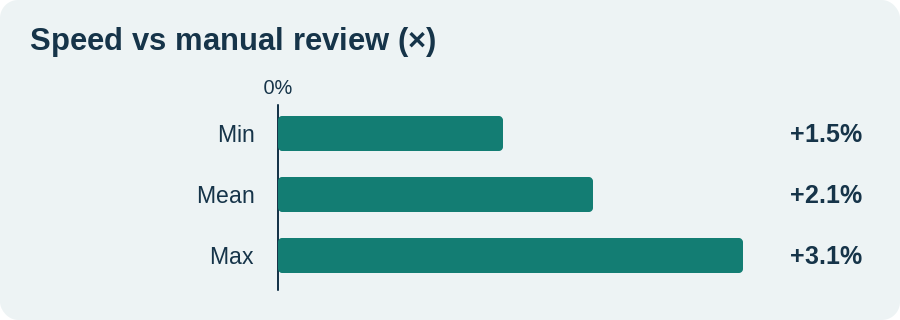
On September 3, 2026, JAMSTEC announced DeepLitterAI to detect, track and count macrolitter in deep-sea survey video. In six independent survey videos around Japan, analysis ran 2.1 times as fast as manual review on average.
Training on realistic footage
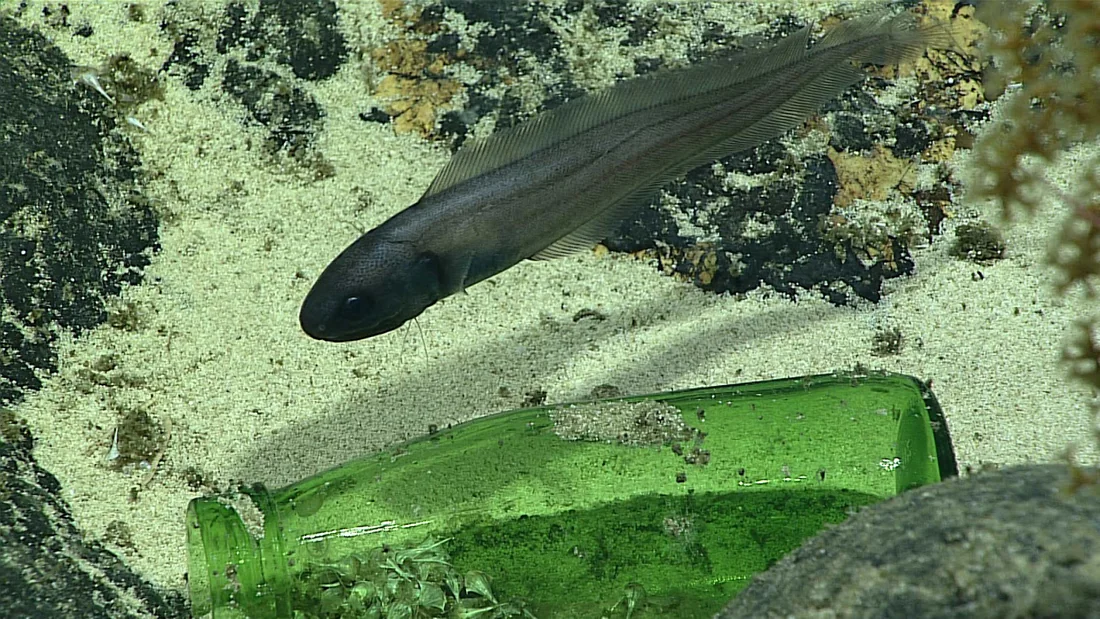
The J-Litter training set contains 12,029 unique images drawn from archived surveys: 4,197 with litter and 7,832 without. The latter include organisms and seafloor features that can resemble litter. Small, distant items are included so the system can identify visible objects such as plastic film, bottles and beverage cans in wide survey views. See JAMSTEC's detection examples.
Tracking and field evaluation
DeepLitterAI follows an item across video frames to avoid counting it twice. The team compared it with manual review on six independent survey videos from waters around Japan, recorded at depths of 860–5,641 m. Analysis was 1.5–3.1 times as fast as manual review, with an average of 2.1 times. Its estimated overall litter density averaged 1.1 times the manual estimate.
What the result covers
Under the strongest artificial turbidity tested, the false-negative rate was 25%; that figure does not describe all field conditions. The system counts litter visible in the footage. It does not measure the total amount of litter in the ocean.