Avid Medical recall calls for discarding entire IV start kits from lot 1658437
U.S. healthcare facilities and distributors should check Halyard IV Start Kit model KRIV26-02, lot 1658437. Avid Medical’s revised recall instructions call for quarantining and destroying the entire affected kit after completing the response form, even if an older sticker directs staff to discard only the skin-prep applicator.
FDA early alert and October 14 Class I update
Check the model and kit lot
The FDA lists the product as Halyard IV START KIT NON-STERILE, reference KRIV26-02, kit lot 1658437 and unique device identifier (UDI) 10809160460481. The agency’s device recall record Z-3108-2026 lists 288 units in commerce and showed the recall as open and classified when checked on November 13, 2026.
Quarantine the kit and follow the revised instructions
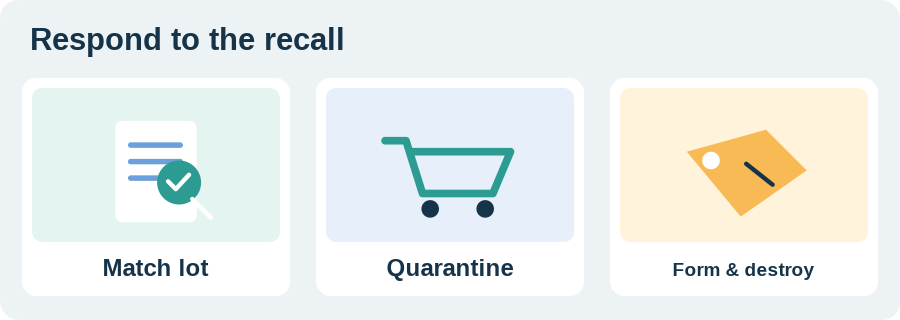
Avid Medical’s August customer update superseded the component-only disposal instructions for this lot. Check stock, quarantine affected kits, complete the recall response form and destroy each affected kit in full. Distributors and other suppliers that transferred the kits should notify recipients, request that they destroy affected stock and include their quantities on the response form. The FDA says the revised instructions apply to the specific lot in its notice. U.S. customers can contact Avid Medical at complaints@owens-minor.com.
The recall traces back to a skin-prep applicator
The affected kit contains a BD ChloraPrep Clear 1 mL applicator from BD lot 4032183. BD said certain environmental conditions can allow the fungus Aspergillus penicillioides to grow. The FDA warns that a contaminated applicator can cause serious infection. The agency issued an early alert on August 28, 2026, and updated it on October 14 to report a Class I classification, its most serious recall category.

