Italy strengthens protections for platform workers, with decree effective December 2

Italy’s Official Gazette published a decree on November 14 to improve working conditions and personal data protections for people who work through digital platforms. The decree transposes EU Directive 2024/2831 and takes effect on December 2. It establishes a presumption of employment where there is evidence of direction and control, and requires disclosure when automated monitoring or decision-making is used.
Employment presumed where there is evidence of direction and control
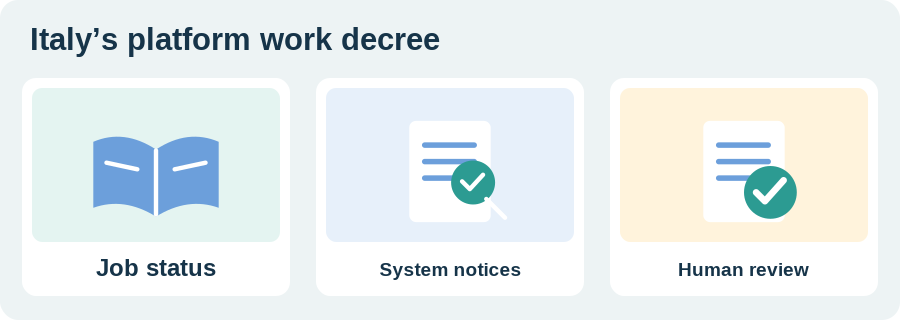
Article 5 provides that where facts indicate that a platform has powers of direction and control, the relationship between the platform and the worker is presumed to be an employment relationship unless proven otherwise. This also covers direction and control exercised through automated monitoring or decision-making systems. For contractual relationships entered into before the effective date and still in force on that date, the presumption generally applies from the effective date onward.
Platforms must disclose automated systems and leave key decisions to people
Article 8 requires platforms to inform workers and their representatives when they use automated monitoring or decision-making systems. Article 9 provides that decisions with serious adverse consequences for workers, such as ending a contractual relationship or closing an account, must be made by a person. It also requires platforms to assess the impact of individual decisions involving automated systems at least once every two years, with workers’ representatives taking part.