Molecular antennae help azobenzene switches respond to green light
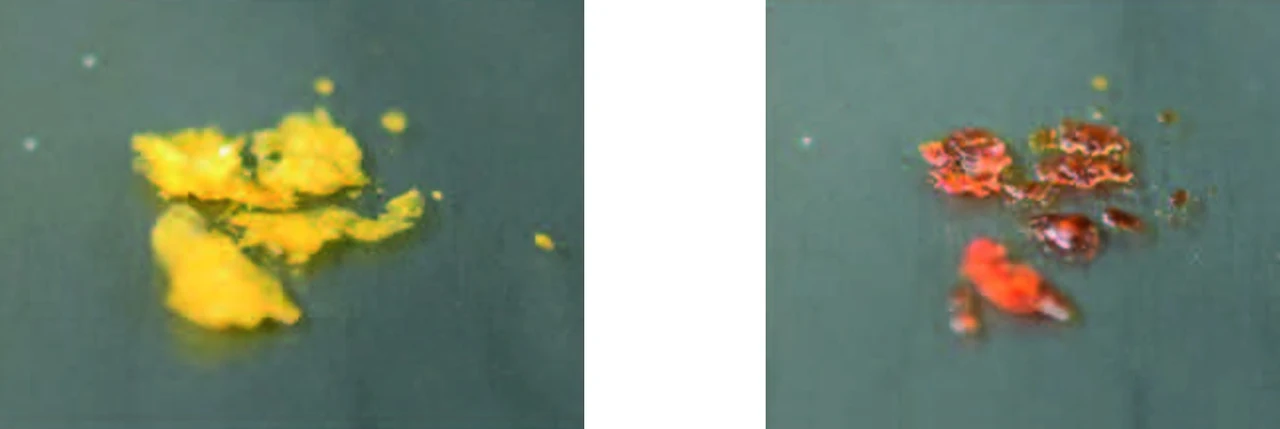
A light-harvesting attachment increased the visible-light sensitivity of azobenzene molecules in solution, offering a design route for future light-responsive materials.

Designing the antenna
Azobenzene changes its molecular shape when illuminated, making it useful as a light-controlled switch. Researchers at Tohoku University and Heinrich Heine University Düsseldorf attached dipyrrin-based molecular antennae to collect visible light and pass the excitation to azobenzene. Their study appeared online in the Journal of the American Chemical Society on August 19, 2026. View Tohoku University's molecular-antenna schematic
The comparison in toluene
The team made one switch with a BODIPY antenna, called AzoB, and another family with chains of dipyrrin–zinc units. Under 505 nm green light, the sensitivity measure εΦ was 7,500 M⁻¹ cm⁻¹ for AzoB and 8,100 M⁻¹ cm⁻¹ for the ten-zinc-unit AzoZn10. This measure multiplies how strongly a molecule absorbs light by the fraction of absorbed photons that produce a shape change. The measurements were made in toluene. For comparison, unmodified azobenzene measured 34 M⁻¹ cm⁻¹ and had a 19% quantum yield, versus 8.3% for AzoB. AzoB's stronger absorption more than compensated for its lower fraction of successful switches.
What the experiments show
Spectroscopy and calculations supported the proposed transfer of excitation from the antenna to the switching unit. The work characterizes molecules in solution. Light-responsive materials and light-controlled drugs are possible directions for further research, but this study did not demonstrate a working material or a clinical treatment.
Primary sources
- Chiba et al., Journal of the American Chemical Society, 2026-08-19 (DOI 10.1021/jacs.6c12118)
- JST / 東北大学 / Heinrich Heine University Düsseldorf, 2026-08-20 (PDF)
- Tohoku University, 2026-08-20
- Norikane, Tanaka & Uchida, CrystEngComm 2016, Figure 1
- Norikane, Tanaka & Uchida / Wikimedia Commons
- Creative Commons Attribution 3.0 Unported (CC BY 3.0)
