South Korea plans winter ship and port inspections and water temperature updates for 210 coastal areas

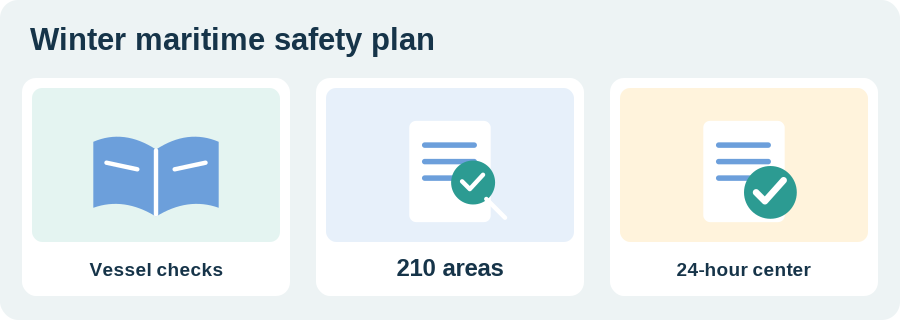
South Korea’s Ministry of Oceans and Fisheries has drawn up a plan to limit damage to shipping and fisheries from heavy snow, cold waves and strong winds. The plan runs from November 15, 2026, to March 15, 2027. It calls for advance inspections of passenger vessels, fishing boats and port facilities, and real-time water temperature information for aquaculture operators in 210 coastal areas.
Advance inspections and departure restrictions in severe weather
The ministry and partner agencies will inspect coastal passenger vessels, fishing boats, port and fishing harbor facilities and construction sites, aquaculture farms, and aids to navigation. If conditions worsen, such as when heavy snow or high-wave advisories are issued, authorities will restrict departures for passenger vessels and fishing boats and direct them to shelter. Agencies will also manage access to hazardous shorelines, breakwaters and fishing spots.
Support for aquaculture farms during cold-water conditions
The ministry will form local response teams with local governments to advise individual farms on how to prepare for low water temperatures. It will expand monitoring in waters with concentrations of farms and a history of damage, and provide real-time temperatures for 210 coastal areas. It also plans to distribute equipment such as heat pumps in advance, expand aquaculture disaster insurance from 30 eligible categories to 32, and promptly issue disaster assistance covering 50% of losses.
Emergency operations center to operate around the clock
The ministry will operate its emergency operations center around the clock and activate emergency teams in stages if cold waves or heavy snowfall persist. It will share snowfall information for islands in the Yellow Sea in real time with the Ministry of the Interior and Safety and local governments. Fishing boats and passenger vessels will receive maritime weather information as needed.