Rust nightly enables the parallel compiler front end by default with two threads
On 16 November 2026, the Rust compiler team announced that nightly builds now run the compiler front end, which handles tasks such as type checking, in parallel by default. The 14 November nightly began using two threads while the team investigates issues before bringing the change to stable Rust. The stable front end continues to run on one thread.
Parallel front end for type and borrow checking
Rust’s LLVM-based back end already supported multiple threads. The front end, which checks types and borrowing rules, could also run in parallel, but users previously had to enable it themselves. The team said the order of diagnostics can change and there are known issues with producing reproducible executables.
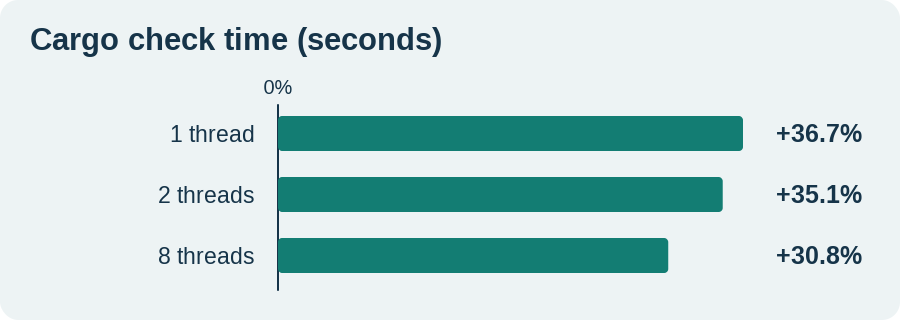
Checking Cargo and its dependencies took 30.8 seconds at eight threads
On an eight-core machine, the team reported that checking Cargo and its dependencies took 36.7 seconds with one front-end thread, 35.1 with two, 31.9 with four and 30.8 with eight. In a separate measurement, using two threads reduced the time to check a single crate from scratch by an average of 21.95%. Results depend on the workload and the number of CPU cores.