OpenAI analyzes ChatGPT use by 1,819 scientists and reports their estimates of time savings

On November 16, OpenAI reported that it had classified more than 580,000 research-related messages from 1,819 scientists in its ChatGPT pilot for researchers and surveyed 251 people. Respondents estimated that the same work at the same quality would take 1.9 times as long without AI.
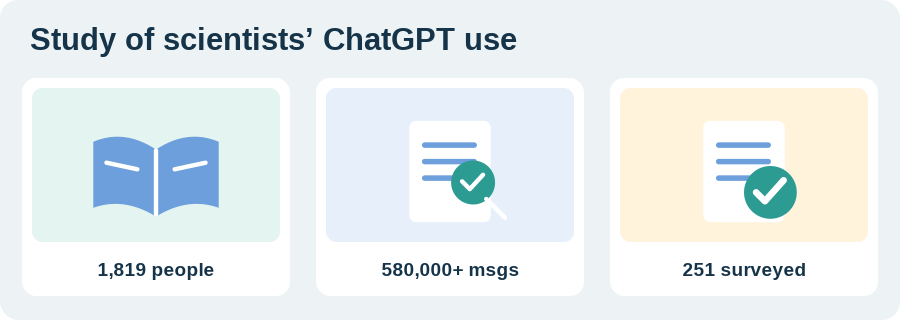
From reviewing literature to analyzing evidence and developing ideas
The analysis covered August 20 to September 22. OpenAI’s economic research team said participants used ChatGPT for tasks including reviewing literature, analyzing evidence and developing research ideas. Automated classifiers assigned messages to research activity categories. OpenAI says the team saw the categories and did not read the underlying messages or ChatGPT’s responses.
Researchers expect faster discovery, but that remains to be tested
Of the 250 respondents who answered the question about discovery timelines, 98% expected AI to speed up discovery in their field. Both the time savings and faster discovery reflect respondents’ estimates or expectations. OpenAI said further research is needed to see whether discoveries occur faster in practice, which also depends on funding, staffing and capacity to run experiments.