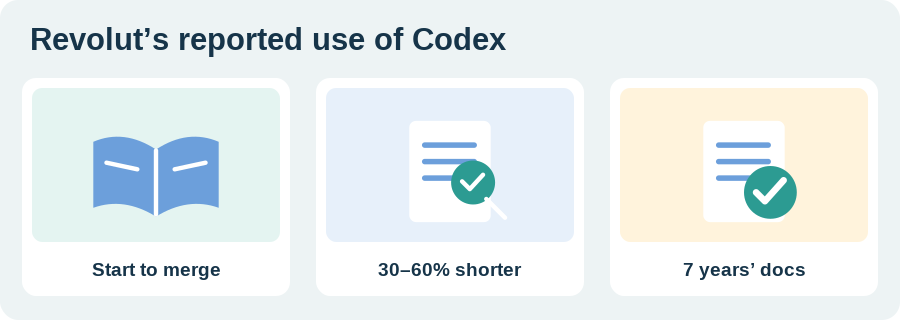
Revolut reports 30–60% shorter time from starting development to merging code with Codex

On 16 November 2026, OpenAI published a case study on financial services firm Revolut’s use of Codex in software development. A Revolut representative said the time from starting work to merging a feature change into the codebase fell by 30–60%.
Developers lead design and review
According to Revolut, developers designed systems, broke features down into tasks and reviewed the output, while using Codex for some implementation work. A Revolut engineer said developers remained responsible for the code they generated with the tool.
About seven years of design documents organised in one day
In another example cited by OpenAI, Revolut organised about seven years of design documents in one day so AI could refer to them. Revolut said this work prepared historical design information for use in an internal tool for designers.