Embraer provides an E195-E2 for a study comparing contrails with standard and low-sulfur fuel
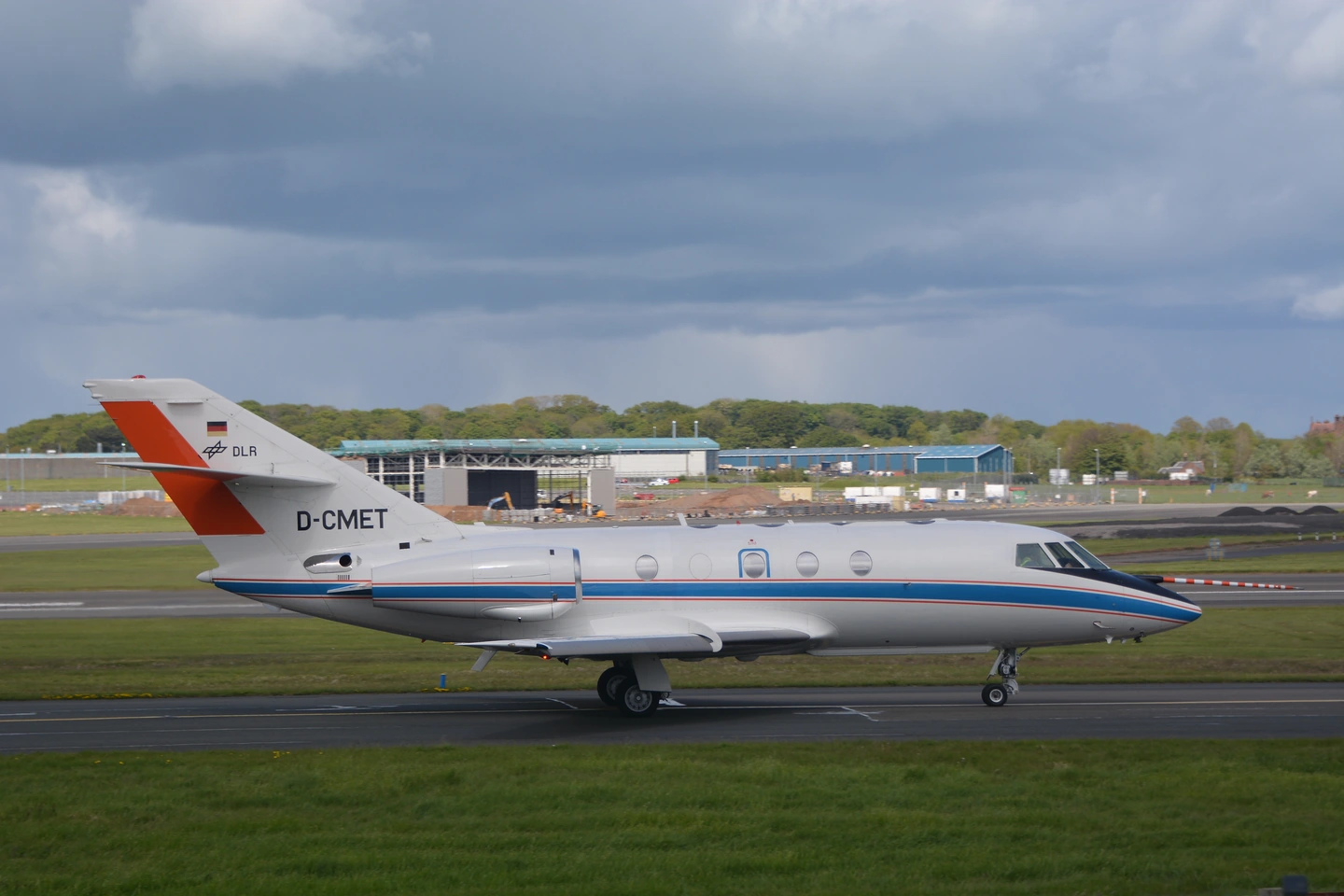
Brazilian aircraft manufacturer Embraer announced on November 16 that it had taken part in IGNITE-X, a contrail study led by the German Aerospace Center (DLR). The team used an E195-E2 passenger aircraft to compare in-flight exhaust and particle formation with standard aviation fuel and low-sulfur fuel prepared for research.

Measuring exhaust and contrails over Germany
The E195-E2 test aircraft used Pratt & Whitney PW1900G engines. In designated airspace over Germany, DLR’s Falcon 20E research aircraft followed the E195-E2 and collected data on exhaust gases and contrails at varying distances from the aircraft. On the ground, the team also measured ultrafine particle emissions under different engine operating conditions.
Can low-sulfur fuel reduce contrail formation?
Contrails form when aircraft exhaust mixes with cold, humid air at altitude and ice crystals form. Both carbon dioxide emissions and contrails contribute to aviation’s climate impact. The research team is investigating whether reducing sulfur in the fuel and using engines that emit less soot can together limit contrail formation. DLR said it had completed the tests and was analyzing the flight and ground measurements together. The announcement gave no results on whether contrail formation decreased.