Brazil issues decree to streamline cosmetics trade under an eight-country agreement
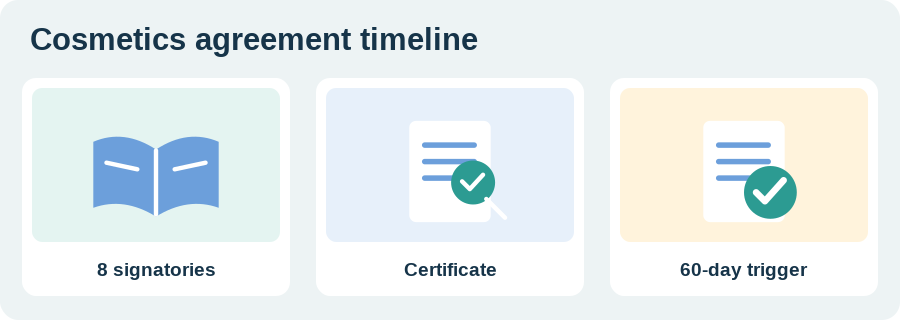
On November 17, Brazil published Decree No. 13,169 in its official gazette to implement a cosmetics trade agreement under the Latin American Integration Association (ALADI). Brazil and seven other countries signed the agreement, which removes the requirement for a Certificate of Free Sale on exports. The agreement starts to apply 60 days after at least two countries notify ALADI that they have completed their domestic procedures.
Removing a certificate requirement and aligning labeling rules
Brazil’s Ministry of Development, Industry, Trade and Services says the agreement removes the Certificate of Free Sale requirement for cosmetics and brings labeling, good manufacturing practices, and ingredient review requirements closer together using international standards. For sanitary procedures, countries will seek to move from prior authorization or registration to notification based on criteria including the risks identified by their authorities. The agreement sets out companies’ responsibilities for product safety and quality and mechanisms for consumers to report problems. It addresses technical barriers to trade and leaves import tariff rates in place. Development, Industry, Trade and Services Minister Márcio Elias Rosa said reducing the procedures and costs of entering export markets was a ministry priority.
Eight signatories and separate dates for the decree and the agreement
The eight signatories to the agreement, whose text is dated February 2026, are Brazil, Argentina, Bolivia, Chile, Ecuador, Paraguay, Peru, and Uruguay. Brazil’s decree took effect upon publication. The ministry says Brazil was the first signatory to complete its domestic procedures. The agreement starts to apply 60 calendar days after at least two countries notify the ALADI Secretariat that they have completed their domestic procedures. It applies to later signatories 60 days after their respective notifications.