Trace amounts of diamond deep beneath continents could explain fast seismic waves
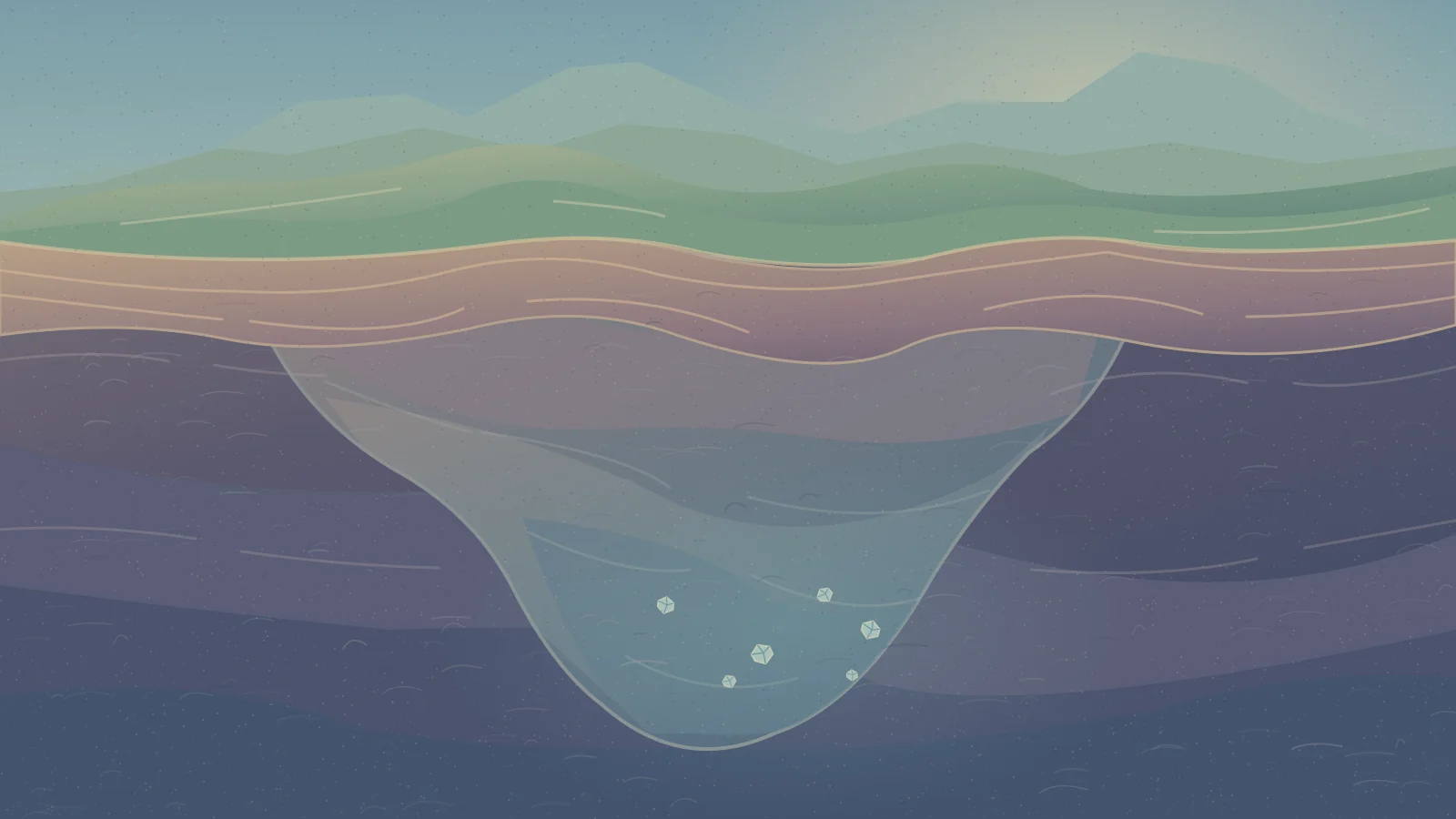
France’s National Centre for Scientific Research (CNRS) announced on November 17 that small amounts of diamond in rock might explain how quickly seismic waves travel beneath old continents. The team estimated that diamond makes up less than 1% of the rock by volume at a depth of 150 km. The estimate comes from a model constrained by seismic and gravity observations, with no samples collected from those depths.

Reconciling fast seismic waves with rock density
Seismic waves travel unusually fast down to about 200 km beneath a craton, a stable part of a continent that dates back to the Precambrian. Cold rocks transmit seismic waves faster and are denser, but gravity observations limit how much denser the rocks beneath cratons can be than the surrounding mantle. The team examined depletion, a change in the rocks’ composition that reduces their density. Depletion is strongest at depths shallower than 150 km and weakens farther down. It could explain only part of what the researchers observed.
An upper estimate for the amount of diamond
The team also examined differences in temperature, the effects of eclogite and chromium, and uncertainties in both seismic observations and mineralogical models. Below the transition from graphite to diamond at depths of 100 to 150 km, adding small amounts of diamond to depleted rock helps account for the high seismic speeds while keeping rock density close to that of the surrounding mantle, the researchers say. They mapped the estimated amount of diamond at depth. Given the uncertainties, those estimates represent an upper bound. The findings appeared in Scientific Reports.