AMD estimates how widespread AI agent use could increase data processing demand
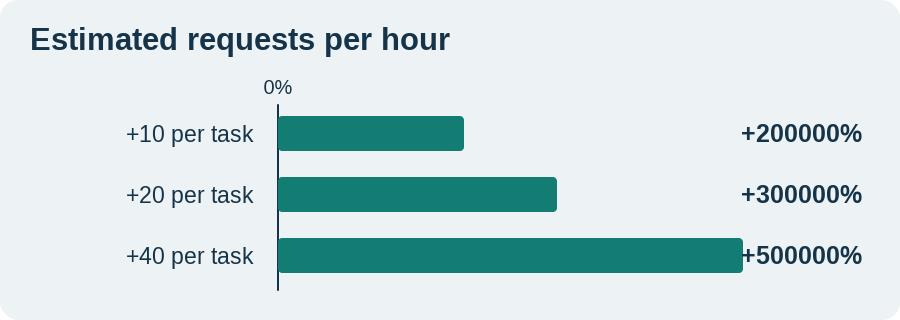
Dan McNamara, who oversees compute and enterprise AI at AMD, published an article on November 18 explaining how widespread use of AI agents could increase requests to enterprise databases and business systems. For a company already processing 100,000 data requests per hour, he gave an example in which agents’ tasks could raise the total to 200,000–500,000 requests per hour.
Data requests per task determine the load
In AMD’s example, agents complete 10,000 tasks per hour at a company whose data stores already handle 100,000 requests per hour. If each task generates 10 additional requests, the hourly total reaches 200,000. With 20 additional requests per task, it reaches 300,000. With 40, it reaches 500,000. A single task can generate multiple requests when it involves looking up customer records, querying databases, calling APIs and verifying results.
Choosing processors for different kinds of work
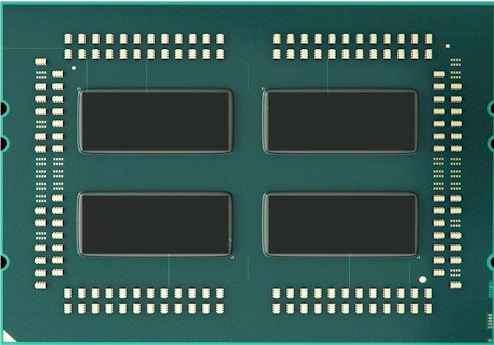
McNamara said accelerators can help run inference for large generative AI workloads, while a CPU can handle surrounding work and certain types of inference close to the data. AMD said its fifth-generation EPYC server processors are available in configurations with up to 192 cores and its sixth-generation EPYC 9006 series raises the maximum to 256 cores per socket.
Server reductions were modeled using a specific benchmark
AMD compared 347 dual-socket servers with Intel Xeon Platinum 8592+ processors and 131 dual-socket servers with AMD EPYC 9965 processors. For roughly the same aggregate performance on the SPECrate 2017 integer benchmark, AMD’s model estimated 216 fewer servers (62%), 45% lower power consumption and 44% lower three-year total cost of ownership. AMD says deployment decisions call for testing on real hardware.