Google reports rise in hourly clean energy certificate trading
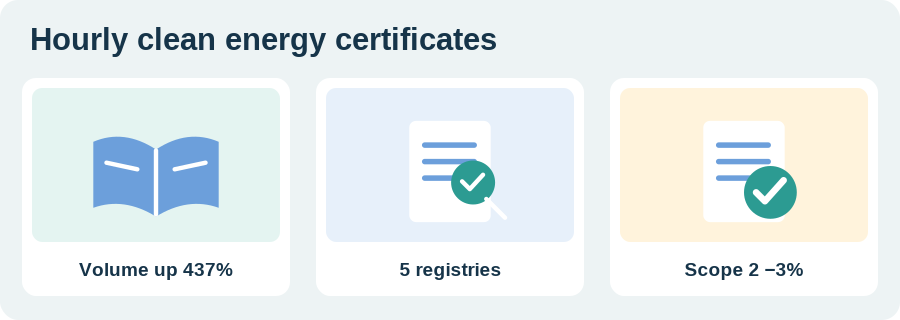
Google reported progress on 19 November in trading and registering granular certificates (GCs), which track clean electricity supply by hour and location. The certificate market in the US Mid-Atlantic PJM grid launched in October 2025. In the third quarter of 2026, trading volume was 437% higher than in the launch quarter, the fourth quarter of 2025.
Certificates track supply by the hour
GCs record where and when clean electricity was supplied so businesses can match their electricity use with supply in the same area and hour. LevelTen launched the marketplace in the PJM grid with the Granular Certificate Trading Alliance (GCTA) and the Intercontinental Exchange. Google says it took part in every monthly spot auction and that certificates for evening hours commanded higher premiums.
Five registries receive grants alongside a storage pilot
A fund Google helped set up awarded grants to five registry operators that issue or track more than 4,000 terawatt-hours’ worth of certificates across more than 70 countries. One operator met the technical requirements to transfer, verify and retire GCs. The other four are expected to finish in early 2027. Google, esVolta, Quintrace and LevelTen also piloted using rechargeable batteries to shift solar electricity to hours when it was needed and track it with GCs.
Google’s market-based Scope 2 emissions fell 3%
Google says its electricity use rose 37% from 2024 to 2025 while its market-based Scope 2 emissions from purchased energy, including electricity, fell 3%. The company says it relied mainly on long-term clean energy agreements and supplemented them with a small volume of GCs bought on the market.