ESA selects a seven-spacecraft mission to study plasma around Earth
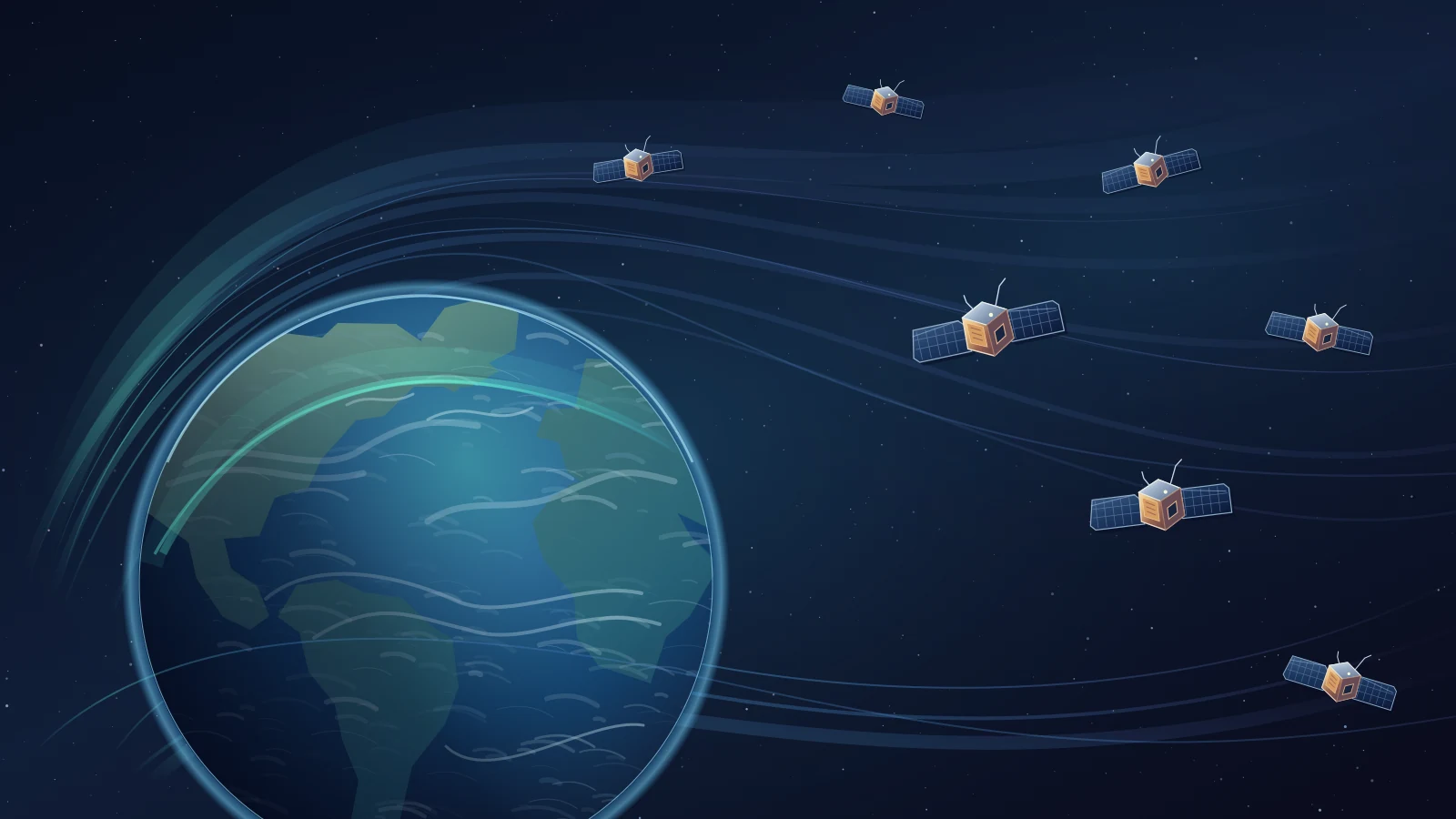
On November 19, Italy’s National Institute for Astrophysics (INAF) announced that the European Space Agency (ESA) had selected the Italian-led Plasma Observatory as its next medium-class science mission. Seven identical spacecraft will make simultaneous measurements around Earth to study how energy from the Sun moves through Earth’s magnetosphere. INAF said launch is planned for 2038.

Seven spacecraft will measure fields and particles together
The seven spinning spacecraft are planned to fly in elongated elliptical orbits. They will simultaneously measure magnetic fields, electric fields and particles where the solar wind meets Earth’s magnetic field. The measurements will help researchers understand how small, fast events relate to changes over larger areas. INAF said the earlier Cluster mission could study one spatial and temporal scale at a time.
About €727 million for spacecraft production
INAF said ESA has allocated about €727 million to build the spacecraft. National agencies will provide separate funding for instruments and scientific operations. An international team led by Maria Federica Marcucci of INAF and others proposed the mission in 2022 with support from the Italian Space Agency. ESA said the selection moves the project toward formal adoption and construction.