UK issues AI guidance for social care in England as pilot reports 63% less admin time

The UK government published guidance on 20 November on using artificial intelligence (AI) in children’s and adults’ social care in England. It aims to cut paperwork and give staff more time to support people who use services and their families. The government said a pilot in Swindon’s adult social care department reduced the time staff spent on administrative tasks by 63% when using AI.
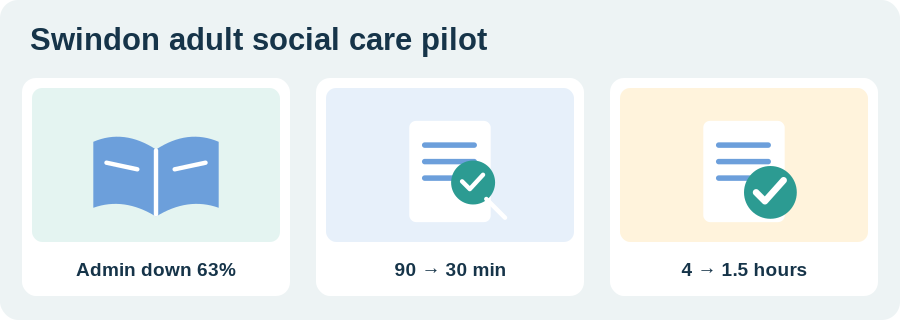
Assessment meetings fell from 90 to 30 minutes on average
Swindon Borough Council tested an AI tool to support social workers. The government said the average time for an assessment conversation about support needs under the Care Act fell from an hour and a half to 30 minutes. Writing up the assessment fell from four hours to an hour and a half.
Summarising and translating records under professional oversight
The non-statutory guidance is intended for local authorities, service providers and social care practitioners, among others. The government cited transcribing and summarising records, translating information and searching complex care histories as examples of how AI can be used. The guidance sets out principles for governance, accountability, data protection and professional oversight.
Peterborough developed an AI assistant for staff
Council staff in Peterborough developed an AI assistant called “Hey Geraldine” that drew on the knowledge of an experienced occupational therapist. The government said it answered more than 1,200 questions from staff and saved about 15 minutes per interaction.