Qwen Code v0.28.3 adds Traditional Chinese interfaces and screen reader support

Qwen Code v0.28.3 was released on November 21. It adds Traditional Chinese to the interface of the browser-based Web Shell and the Visual Studio Code companion. The command-line edition lets users opt in to a screen reader interface.
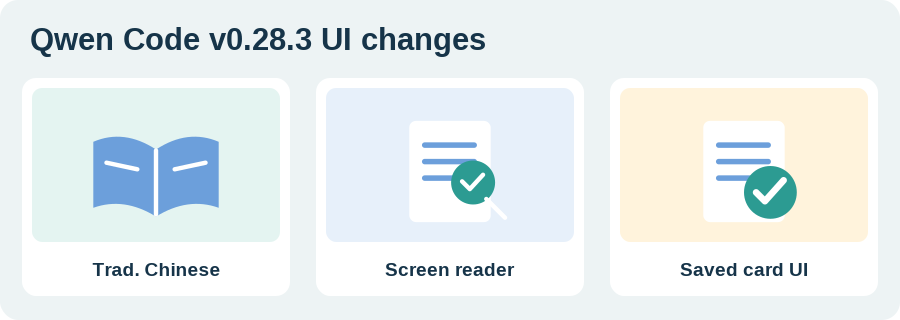
Traditional Chinese comes to Web Shell and the VS Code companion
Traditional Chinese is available in the Web Shell and VS Code companion interfaces. According to the release notes, the Traditional Chinese locales for Taiwan, Hong Kong and Macao, as well as the locale with no region specified, all map to “繁體中文 [zh-TW]”.
Keyboard navigation and spoken announcements for completed replies
The command-line edition’s screen reader interface supports keyboard navigation, announces completed replies and presents conversation history in a structure that screen readers can recognize. Generated UI cards, which display generated interface components, can also retain their view state after a page reload or when a conversation is reopened or forked.