AHA projects nearly 20 million US adults living after a stroke by 2050

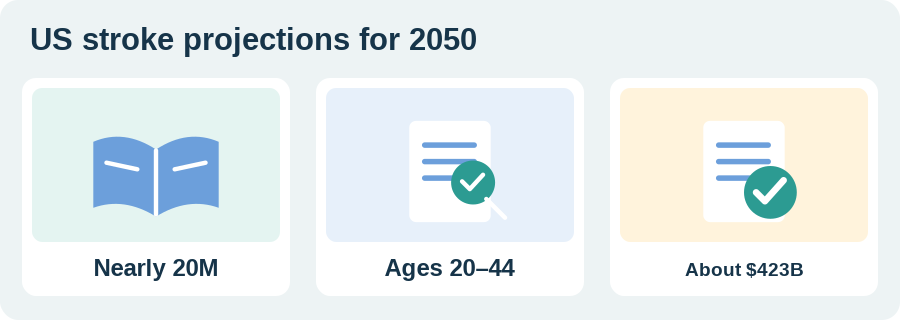
On November 23, the American Heart Association projected that nearly 20 million US adults would be living after a stroke by 2050, almost twice the number in the 2020 baseline. It estimated that the annual economic burden of stroke in the US could rise from about US$65 billion in 2020 to nearly US$423 billion in 2050.
The number could rise fastest among adults aged 20 to 44
The statement, published in the journal Stroke, projects that adults aged 20 to 44 will see the largest relative increase in the number of people living after a stroke. Annual stroke-related costs for this age group could rise from about US$7.9 billion in 2020 to about US$84.4 billion in 2050. The authors also projected particularly large increases in the numbers of Hispanic and Asian adults living after a stroke.
The economic burden includes care and lost productivity
The estimate includes direct healthcare costs, productivity lost when illness or disability keeps people from working, and lifetime earnings lost to premature death. The statement projects that the cost per person living after a stroke could nearly triple by 2050.
Developments in prevention could change the outlook
Hugo J. Aparicio, who chaired the statement’s writing group, said the projections could not account for every development that might lower future stroke risk. Better prevention and access to preventive care could reduce the burden. If risk factors continue to increase, he said, the impact could be greater than projected.