Beijing’s Zhongguancun hosts assistive technology event on mobility and communication

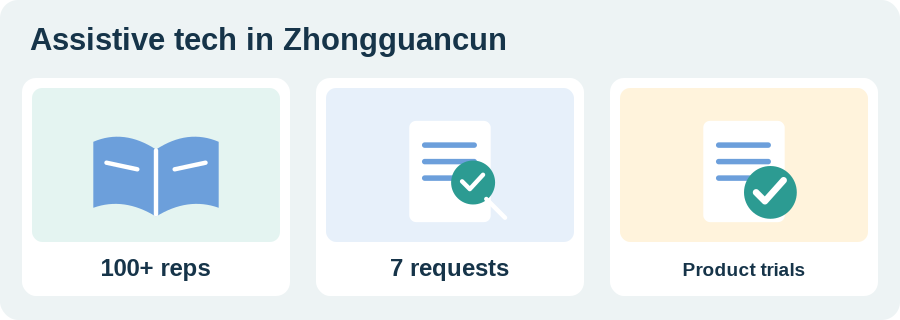
Beijing announced on November 23 that it had held an assistive technology showcase and business matchmaking event at the Zhongguancun International Technology Trading Center. More than 100 company representatives attended. Disability organizations and other groups raised challenges around mobility, communication and daily care, while companies and research institutions presented technologies including real-time captions.
Museum and disability service center raise seven requests
The event was part of the Zhongguancun Forum series and was jointly organized by the Beijing Municipal Science and Technology Commission, the Administrative Commission of Zhongguancun Science Park and the Beijing Disabled Persons’ Federation. Organizations representing people with visual, hearing or physical disabilities called for products that address barriers to mobility, communication and daily care. The Grand Canal Museum and a disability service center in Beijing’s Xicheng District put forward seven requests in total, including making public cultural facilities barrier-free and digitizing services at disability support organizations. The requests addressed the needs of people with visual, hearing, physical, intellectual or psychosocial disabilities across two areas, rehabilitation support and public cultural services.
Participants try captioning and voice-controlled devices
Companies and research institutions showcased products that display captions in real time, voice-controlled wearable devices and systems that provide accessible descriptions of video content. The event also presented the Beinao-1 project, which is exploring whether brain-computer interface technology could help people with paralysis regain motor function. Representatives of companies, research institutions, disability service organizations and people with disabilities tried the products and discussed adapting them to different settings and working together to put them into use.